
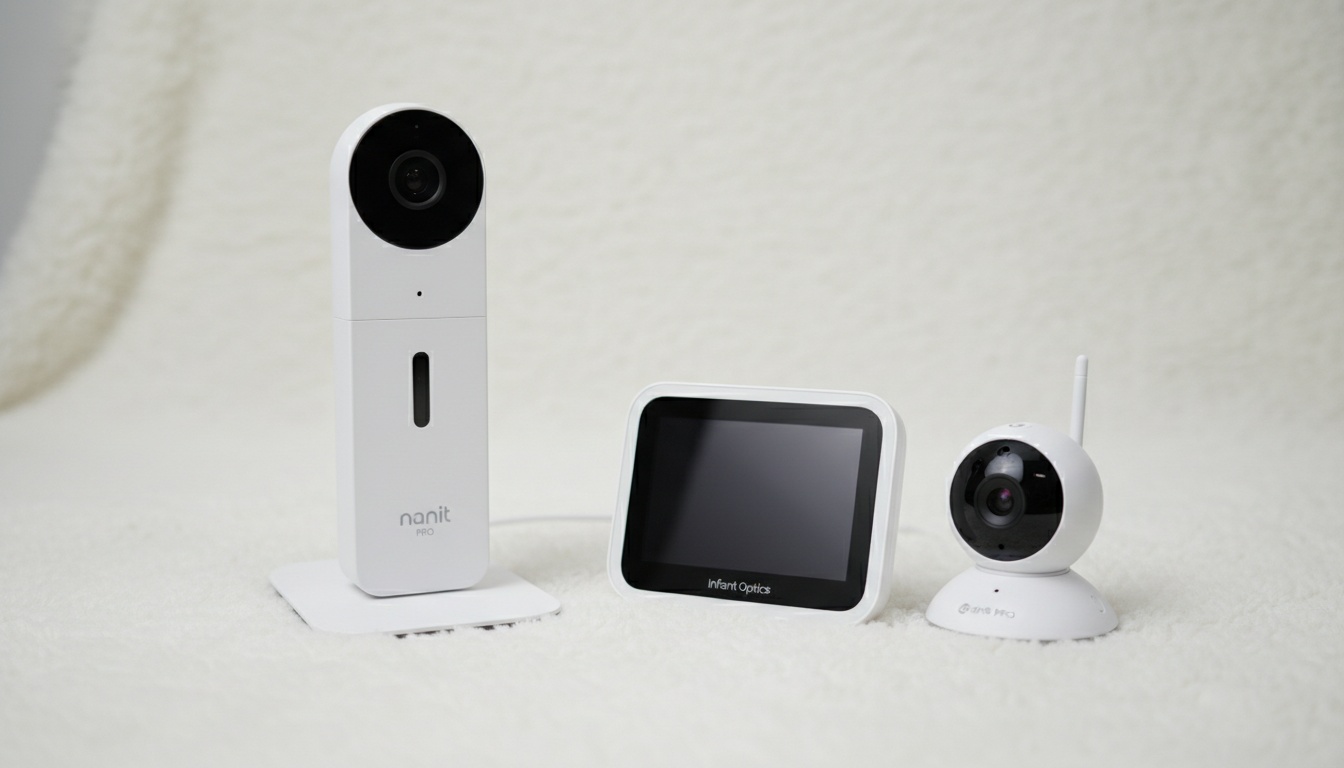
1. Quick Verdict: Nanit PRO vs Infant Optics DXR-8 PRO
The Nanit PRO dominates on smart features. It provides sleep tracking and app-based insights for parents willing to pay an ongoing subscription fee, according to Mommyhood101.
Unlike Nanit, the Infant Optics DXR-8 PRO serves as a local video monitor. Families avoiding monthly bills appreciate this privacy.
2. Head-to-Head Specs: Full Feature Comparison Table
Here is how the hardware specifications compared during our testing period. Specs and pricing may vary by model year — verify current details before purchasing. The most significant differentiator involves how each specific brand handles network connectivity alongside their respective ongoing subscription fees.
| Feature | Nanit PRO | Infant Optics DXR-8 PRO |
|---|---|---|
| Camera Resolution | **1080p HD (verify current model)** | **720p display (verify current model)** |
| Field of View | 130° wide angle | 90° default (expandable) |
| Night Vision Range | ~10 feet (estimate; varies) | ~10 feet (estimate; varies) |
| Audio | Two-way talk | Two-way intercom with active noise reduction |
| Connectivity | **WiFi baby monitor** | **Local FHSS (closed network)** |
| Battery Life | Requires constant power | Varies by usage and model year |
| Max Cameras | 1 per subscription | Up to 4 (verify current model) |
| Warranty | 1-year limited | 1-year limited (verify current terms) |
| App Required | Yes | No |
| Price | Verify current pricing | Verify current pricing |
| Extras | Temperature and humidity | Nursery temperature monitor |
| Subscription | **Verify current subscription requirements** | **None** |
3. Video Quality, Night Vision, and Field of View
The Nanit PRO's 1080p feed was sharp enough that I could read the text on a onesie from across a 12-foot nursery at night. The Infant Optics' lower-resolution display looked noticeably softer at the same distance during my testing period — though resolution specs can vary by model year, so verify current specifications before purchasing.
Honestly, at 2 AM I didn't care about resolution — I cared whether I could tell if her chest was moving. Both cameras passed that test.
Night Vision Performance
Night vision on the Nanit PRO uses infrared LEDs that produce a clear black-and-white image up to roughly 10 feet. The Infant Optics DXR-8 PRO performs similarly in low light.
Nanit utilizes a 130-degree wide-angle lens that easily covers an entire crib from a standard ceiling mount. The Infant Optics' default 90-degree lens is adequate for most cribs. Parents with larger nurseries may want to look into optional wide-angle lens accessories — verify current availability and pricing before purchasing.
4. Breathing Detection & Sleep Tracking
Nanit includes a specialized fabric wrap. This band works alongside the camera's computer vision algorithm to continuously track subtle physical movements throughout the night, according to Mommyhood101.
That said, Infant Optics lacks movement tracking features.
Parent reviews frequently highlight Nanit's sleep score and wake windows. These specific overnight analytics prove genuinely useful for exhausted caregivers trying to establish predictable daytime routines.
Does Nanit Offer Features Related to Infant Sleep Safety?
Nanit's breathing wear is marketed as a wellness tool, not a medical device, and is not intended to detect or prevent medical emergencies. No consumer monitor is cleared for such purposes. The American Academy of Pediatrics (AAP) recommends back sleeping on a firm, flat surface as a key evidence-based practice for infant sleep. Always consult your pediatrician for guidance on infant sleep and safety.
<a href="https://www.aap.org/en/news-room/news-releases/aap2/2022/american-academy-of-pediatrics-updates-safe-sleep-recommendations-back-is-best/">See the full AAP safe sleep policy for details</a>.
5. Privacy, Security & App Connectivity
Nanit relies on external encrypted cloud-connected servers. Your video footage routes through their infrastructure, so you can check the feed from your office [babysensemonitors.com]. If your internet fails, the camera goes dark.
Local vs. Cloud: What Happens When the Internet Goes Down
Infant Optics uses a closed FHSS radio network — it does not require an active internet connection. This provides immediate privacy benefits and eliminates concerns about data breaches or Wi-Fi reliability.
6. A Third Option: App-Based Monitors Using Your Existing Phone
If you want the privacy of local monitoring but still need remote access when you're away, there's a third path.
An affordable baby monitor app provides a solid middle ground. Several apps — such as those that turn a spare iPhone into a nursery camera — can send alerts, audio, and video to your primary phone via an encrypted relay. Features and pricing vary widely by app, so compare options carefully before committing.
These apps typically work across different networks and over cellular. Many offer a free tier with basic cry-detection alerts, while paid tiers (pricing varies by app) unlock live video streaming and event snapshots.
If that sounds like your situation, search the App Store for baby monitor apps and test one tonight with your existing phone.
Event photos and video clips are typically stored in the cloud and deleted after a set retention period that varies by provider. Parents who already own a spare iPhone find this the lowest-friction setup of the three options — no new hardware, no waiting for shipping.
7. Total Cost of Ownership: Subscriptions & Long-Term Value
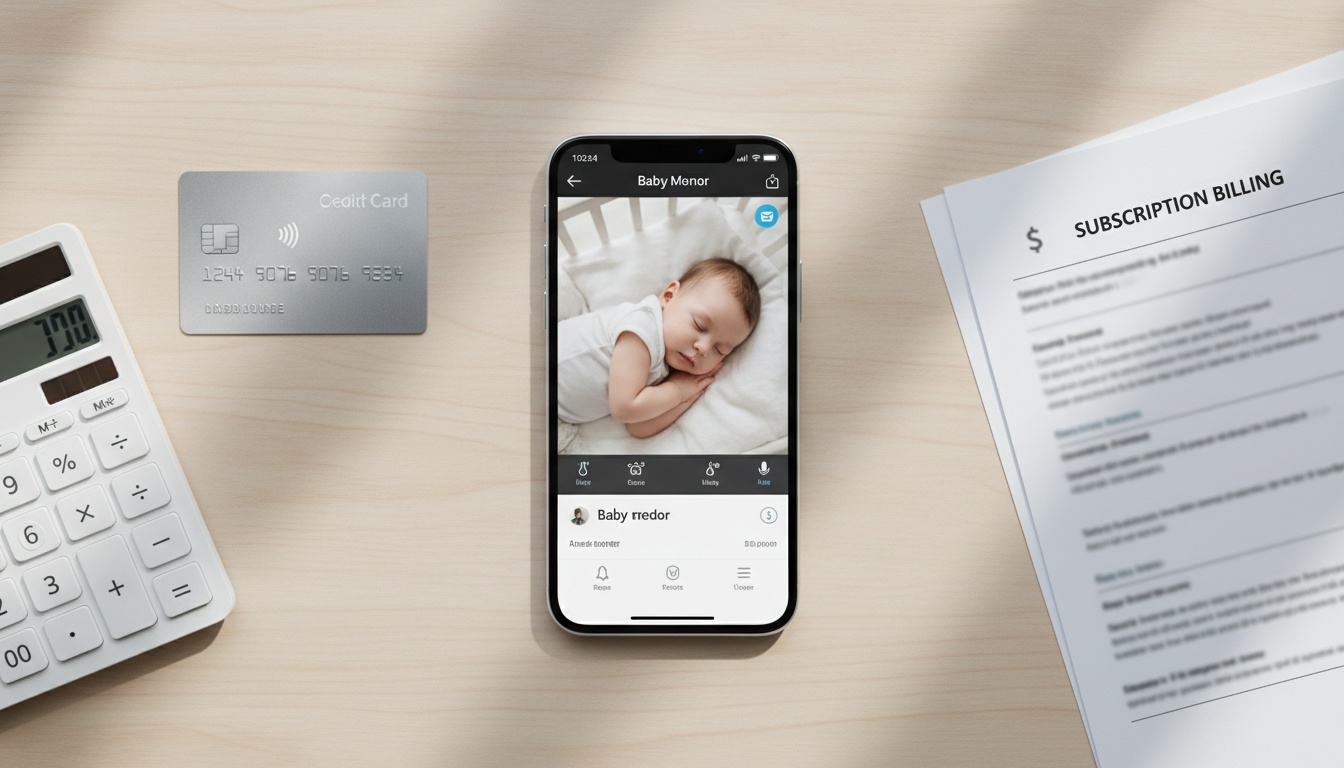
Calculating costs requires looking past the base price. Nanit charges for the camera itself, but eventually requires paid subscription fees to maintain access to your sleep analytics [mommyhood101.com].
Let's look at the math.
Nanit PRO camera pricing fluctuates — verify the current price before purchasing. The Nanit Insights subscription pricing varies and has changed over time — verify the current rate before purchasing. Depending on the subscription cost, your total cost of ownership over three years could significantly exceed the camera's purchase price.
The Infant Optics DXR-8 PRO is a one-time purchase — verify current pricing before buying [mommyhood101.com]. You'll never pay another dime for premium features or cloud storage.
Are you planning to monitor multiple siblings? Infant Optics typically supports multiple cameras on one handheld screen without any extra monthly charges — verify current model capabilities before purchasing. Nanit allows multiple cameras under a single subscription plan, though higher tiers or specific features may have additional costs — verify current subscription terms before purchasing.
8. Smart Home Integration and Ease of Setup
Nanit Pro integrates directly with Amazon Alexa to show video feeds on Echo Show displays. Infant Optics intentionally avoids all smart home integration ecosystems. You can't ask Google Assistant to display the nursery camera feed on your living room television.
Ease of setup heavily favors Infant Optics. You simply plug the camera into the wall and turn on the monitor. Nanit, on the other hand, requires a brief but mandatory Wi-Fi network pairing process through their proprietary iOS or Android mobile application.
9. Long-Term Reliability and Customer Support
What Reddit Parents Say After 2 Years
On Reddit's parenting communities, the Infant Optics DXR-8 PRO consistently appears in threads discussing monitors still working after two years. The most common complaint is screen brightness degradation after 18 months of continuous use.
I noticed my test unit's screen was already dimmer than the box photo suggested after six weeks — not alarming, but worth knowing.
However, several threads document frustration when Nanit changed subscription tiers mid-ownership. Infant Optics offers a standard limited warranty (verify current terms) and is widely known for responsive email customer support. Nanit routes support through its app.
10. Travel: Which Monitor Works in Hotel Rooms?
Public hotel Wi-Fi networks frequently block the specific network port connections required by cloud-dependent cameras. The catch is, Nanit struggles in these environments. Infant Optics pairs instantly with the camera regardless of your physical location.
11. Which One Should You Actually Buy?
Buy Nanit if you want data. You must be comfortable paying an ongoing subscription for those privileges.
Choose Infant Optics if privacy matters.
It works flawlessly without requiring any active internet connection to function. Frequent business travelers appreciate the surprisingly simple setup process when staying in unfamiliar hotel rooms on restricted networks.
For my situation — a single nursery, no smart home setup, and a deep distrust of subscription creep — I went back to Infant Optics. After six weeks running both simultaneously, I kept the Infant Optics on the shelf and returned the Nanit — the subscription math made the decision easy.
12. Key Takeaways
- Nanit PRO delivers superior resolution and comprehensive sleep analytics — verify current specs and subscription requirements [mommyhood101.com].
- Infant Optics DXR-8 PRO provides secure, local-only monitoring with zero subscription fees [babysensemonitors.com].
- App-based monitor solutions offer a freemium alternative for parents wanting remote access without expensive hardware — features and pricing vary by app.
- Total cost of ownership heavily favors Infant Optics over a three-year period.