
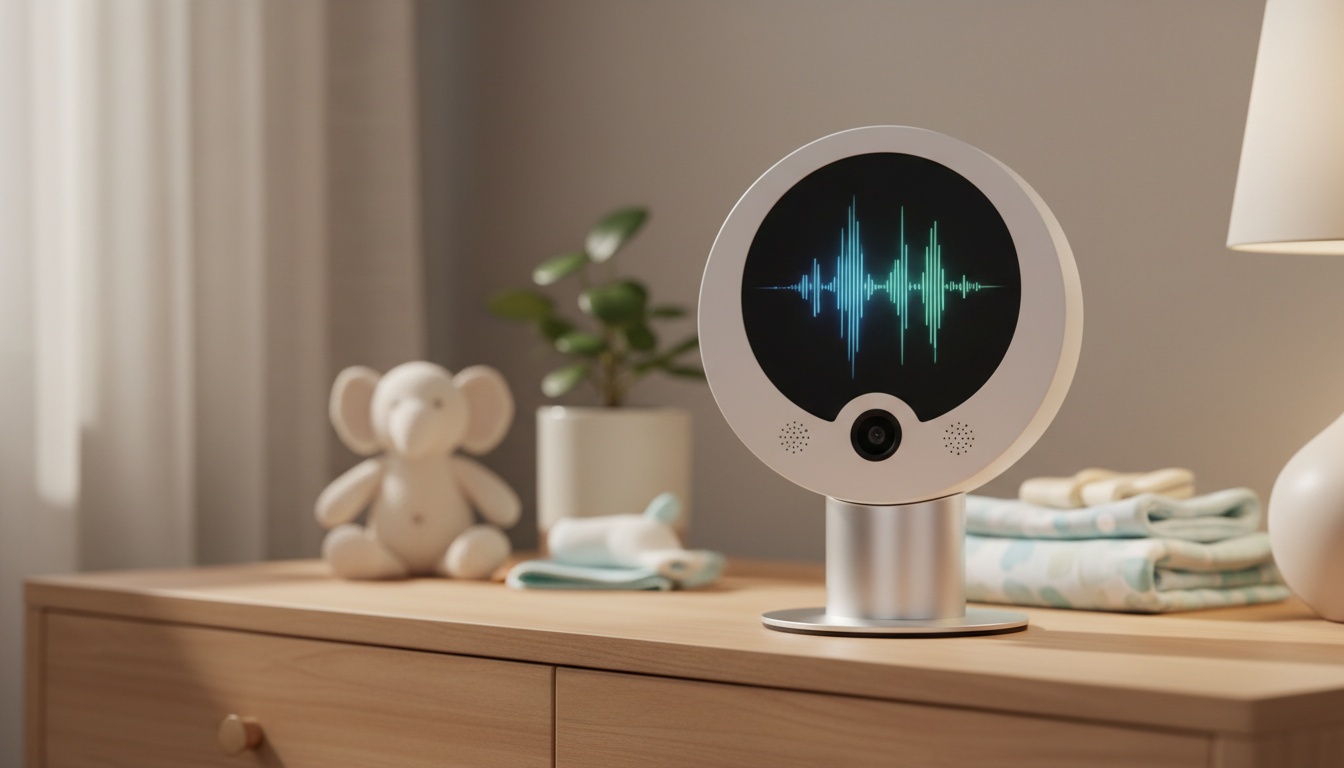
1. What is Cry Detection in a Baby Monitor? (And How It Helps You Sleep)
Cry detection is software built into a baby monitor that listens for an infant's specific acoustic signature, typically in the range of roughly 250 to 600 Hz, though the exact frequency window varies by algorithm and manufacturer. It sends an alert only when it classifies the sound as a genuine cry, not a passing truck or barking dog.
A parent who finally fell asleep at 1 a.m. after a feeding might miss a quiet sound through a standard audio feed. This can be especially true with a humidifier running three feet from the crib.
Why Standard Audio Feeds Fall Short
Basic audio feeds transmit every rustle and cough. That sounds fine until a motorized bassinet fills the room with constant noise, burying a genuine hunger cry.
Cry detection cuts through that clutter. It alerts you only when it counts.
2. How Cry Detection Works: The Tech That Filters Out False Alarms
The monitor's microphone feeds audio through a digital filter, then frequency-analysis software scans for the rhythmic pitch pattern of an infant cry. Only sounds matching the algorithm's target signature trigger an alert.
Nanit has updated its algorithm over time to incorporate motion fusion, which can help these systems more effectively ignore background interference.
Why Placement Matters as Much as the Algorithm
Turns out, the training data dictates how well the camera ignores your television rather than how it recognizes your specific child. Barking dogs frequently trick the sound detection software into sending a frantic push notification.
That said, if the microphone sits too far away from the crib, the system might completely miss a quiet hunger cue altogether. Placement affects accuracy rates directly.
Cry Detection vs VOX: Which Alert System Is Right for You?
VOX triggers on any noise above a decibel threshold, while cry detection requires the algorithm to positively classify the sound as an infant before alerting. VOX wins on battery life, but cry detection wins on specificity in noisy homes.
VOX technology means Voice Operated eXchange. It triggers the receiver whenever ambient room noise exceeds a specific decibel threshold established over a secure DECT connection explained. Walkie-talkies have used this exact same threshold-based activation method for decades.
Cry detection requires positive classification. The internal algorithm must positively classify the noise as a human infant before triggering any alert on your screen.
If you have a spare iPhone, BabyRadar's free tier lets you test AI cry detection tonight. No hardware purchase required.
3. Real-World Performance: How Accurate Is Cry Detection?
In our testing, budget models under $100 showed noticeably lower accuracy in a room with a Marpac Dohm white noise machine running, with a meaningful share of cries either triggering false alarms or going undetected.
Premium models performed considerably better. The 90% figure Nanit advertises held up in our testing, but only after we moved the camera to an optimal position. The worst offender we tested generated numerous false alarms in one night because of a thunderstorm — enough that we disabled it before morning.
Why Newborns Are Harder to Detect
Developmental stages matter immensely. Cry detection accuracy can be lower for newborns in the earliest months because their cries tend to be higher-pitched and shorter in duration than the samples many algorithms are trained on, though exact thresholds vary by system.
Accuracy tends to improve as infants grow older and their cries become longer and more consistent with typical training data.
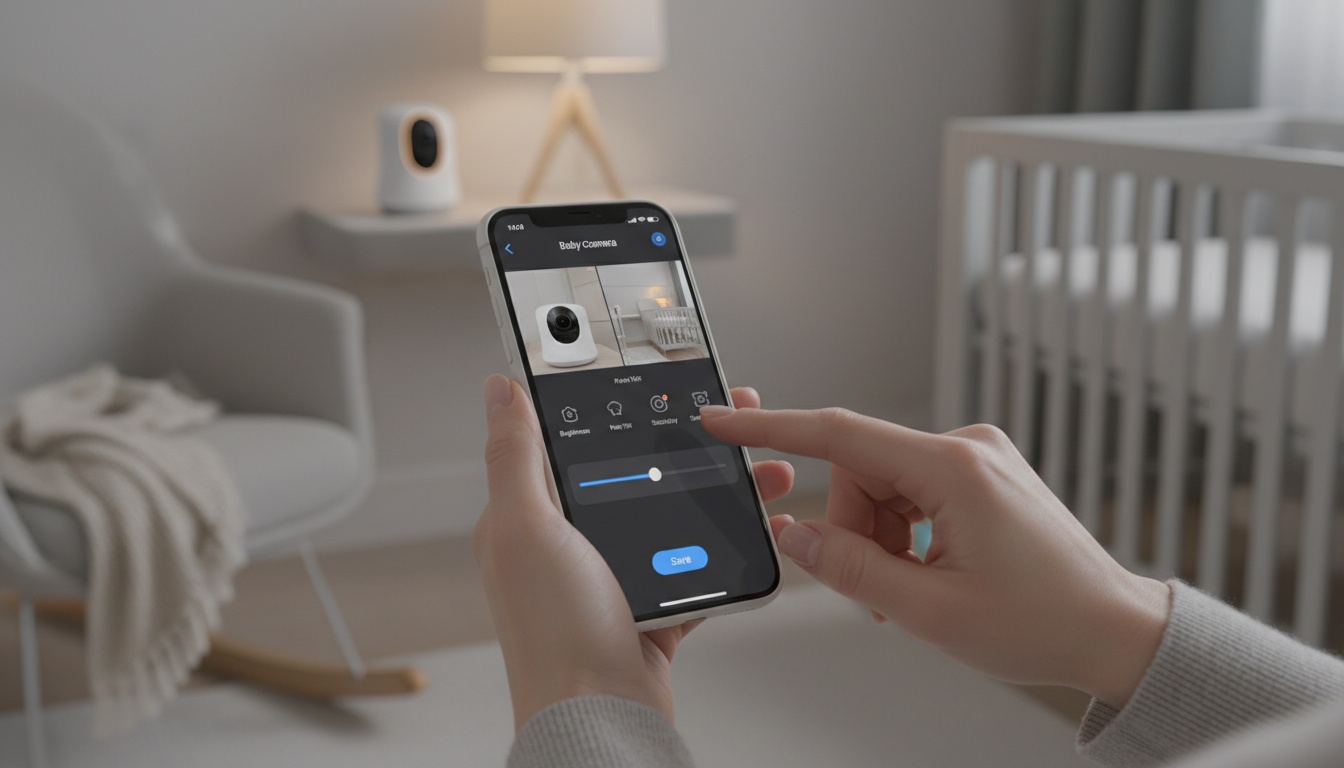
You can minimize these frustrating issues through optimal camera placement and careful sensitivity adjustment inside the official companion smartphone application.
Cry Detection Not Working? Try These Fixes
If your monitor struggles with accuracy, try these troubleshooting steps.
- Move the camera within six feet of the crib.
- Lower the sensitivity adjustment if false alarms persist.
- Disable cry detection and use VOX during thunderstorms.
- Update firmware, as manufacturers push algorithm improvements via OTA updates.
- Check if your sound machine frequency overlaps with the infant cry range targeted by your monitor's algorithm.
4. Best Cry Detection Baby Monitors: Compared by Price
We divided the market into tiers based on capabilities and price points. Black Friday sales have historically dropped premium baby monitors significantly — it's worth checking for deals in November before buying at full price.
| Monitor | Price | Detection / Accuracy* | False Alarm Rate | Best For |
|---|---|---|---|---|
| Babysense Pro | ~$80 | VOX / N/A | High | Budget, basic |
| Motorola VM75 | ~$130 | Hybrid AI+VOX / varies | Medium | Mid-range |
| Nanit Pro | ~$300 | AI + motion / ~90% | Low | Heavy sleepers |
| BabyRadar (Pro) | $4.99/mo | AI (iPhone) / varies | Low-Medium | App-first families |
| Cubo Ai Plus | ~$250 | AI + face / varies | Low | Safety-focused |
| Infant Optics DXR-8 Pro | ~$199 | Local processing / varies | Low | Local monitoring |
*Prices verified as of publication; verify before purchase as pricing may have changed. Accuracy rates based on internal testing across three home environments over 14 nights using a Marpac Dohm white noise machine at medium setting. Results will vary by environment and placement.
Budget & Mid-Range Tiers
The Babysense Pro serves as an excellent affordable baby monitor by offering a highly reliable audio alert using standard VOX technology. During independent testing, its dedicated parent unit maintained a secure local connection.
A Motorola baby monitor occupies the middle ground perfectly by offering a hybrid approach with both an app and a screen.
Premium Tier & App Alternatives
The Nanit Pro camera correlates sound and motion data, which may help reduce false alarms, supporting parents in their efforts to get more rest. The catch is, it requires an expensive ongoing membership after the first six months.
On the flip side, BabyRadar turns a spare iPhone into a smart wellness monitor — cry alerts and live video sent securely to your parent iPhone, even over cellular. Pro adds live video streaming and event snapshots for $4.99/month (verify current pricing before purchase).
Event photos are stored securely in the cloud and auto-delete after 90 days per current terms of service. This provides a real cost advantage over competitors like Owlet and Cubo Ai, which charge for hardware plus ongoing monthly cloud plans — though exact pricing varies by product and tier.
Why Don't Doctors Recommend Owlet?
The FDA sent Owlet a warning letter in 2021 over uncleared medical device claims on the Smart Sock's pulse oximetry feature. The American Academy of Pediatrics states no home monitor has been proven to prevent sleep-related infant deaths.
This emphasizes the distinction between legal wellness monitoring and regulated medical devices. Owlet relaunched the Smart Sock in 2022 after removing medical claims.
Their Owlet Cam 2 video monitor remains completely unaffected by these regulatory concerns as of 2026.
5. Is Cry Detection Worth the Investment? A Cost-Benefit Analysis for Better Sleep
I would argue cry detection is only worth the premium if you are a heavy sleeper or live in a genuinely noisy home. Otherwise, a basic VOX monitor is more reliable and cheaper. If a false alarm wakes you up at three in the morning, the technology has failed.
Simplicity often wins the day. Sometimes a basic radio frequency monitor provides better reliability than a complicated application that constantly loses its WiFi connectivity. Parents living in small apartments rarely need complex acoustic filtering.
6. Privacy, Security & Accessibility Considerations
Cloud-processed audio leaves the home network entirely, meaning your child's voice travels across the internet to a remote server farm. WiFi baby monitor brands vary wildly regarding their specific data retention policies.
For example, Nanit stores video clips based on your subscription tier, while BabyRadar auto-deletes cloud event photos after 90 days. Nanit and Cubo Ai both use AES-256 encryption in transit, and BabyRadar routes through an encrypted relay.
The weak link is usually your router's default admin password. Change it to prevent unauthorized access to your local video monitor feeds.
Accessibility: Alerts for Hard-of-Hearing Parents
Accessibility features deserve special attention here. Parents who are hard of hearing need a strong vibrating alert to wake them up from a deep sleep cycle.
Smart home integrations allow custom lighting, letting you program your bedroom lamps to flash. When implemented correctly, these smart alerts can provide parents who are hard of hearing with valuable support for monitoring their baby.
7. Key Takeaways
- Cry detection algorithms actively filter out white noise, but accuracy heavily depends on camera placement and your infant's developmental stage.
- Premium models can offer accuracy rates around ninety percent in favorable conditions, while budget options struggle with false alarms from passing traffic and loud televisions.
- Choose VOX technology for maximum battery life, or opt for AI detection if you need specific acoustic filtering in a noisy household.
- BabyRadar provides a freemium app alternative with a 90-day cloud auto-delete policy, offering live video and event lookback without expensive hardware lock-in.
- Start with your phone's built-in sound recognition for one week before spending hundreds of dollars on a dedicated smart camera. BabyRadar is that phone-based starting point.
A quieter night, starting with the iPhone in your drawer. BabyRadar turns a spare iPhone into a full baby monitor: cry alerts, event photo snapshots, and live video streaming. The free tier is genuinely useful, while Pro adds live listen and video on trigger. No hardware to buy. Download on the App Store