
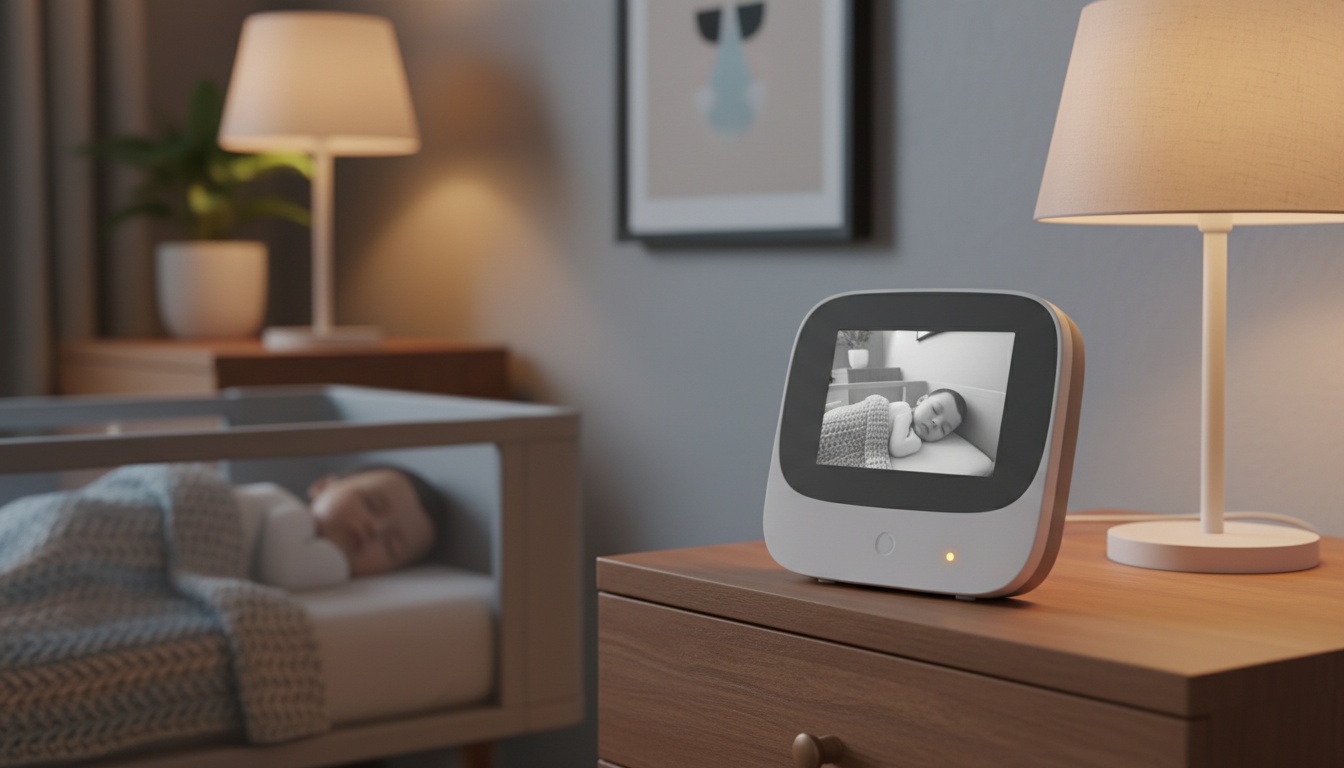
1. Can Baby Monitors Be Hacked? (And How Likely Is It Really?)
Yes, Wi-Fi enabled baby monitors can be hacked through weak passwords and firmware vulnerabilities, but documented incidents appear to be relatively infrequent. Security incidents involving baby monitors often represent a smaller portion of reported smart home device incidents.
Wi-Fi enabled baby monitors connect to your home network, making them theoretically vulnerable to the same attacks that target any connected device. Security researchers have demonstrated vulnerabilities in various smart camera systems during controlled exercises.
In contrast, offline baby monitors operate differently. Audio-only monitors using DECT or analog frequencies remain virtually unhackable because they don't connect to networks. Many models use frequency-hopping spread spectrum (FHSS) technology that switches frequencies rapidly—making interception extremely difficult according to security experts.
The Numbers: How Often Does This Actually Happen?
Based on security research and incident reports, actual baby monitor breaches appear to be relatively infrequent. Most security incidents involve basic password failures rather than sophisticated attacks.
The disconnect between fear and reality stems from media coverage. One verified hacking incident generates dozens of news stories, creating the impression that baby monitor hacking is epidemic when it appears to be statistically infrequent.
Some security experts recommend avoiding WiFi monitors entirely, while others acknowledge that proper security measures can make them acceptably safe. Here's why the convenience often outweighs the minimal risk for most families.
2. How Hackers Exploit Baby Monitors: 5 Attack Methods You Can Actually Prevent
Hackers exploit baby monitors through five primary attack vectors: default passwords, firmware vulnerabilities, man-in-the-middle attacks, brute force attacks, and IP camera hacking techniques.
Understanding attack vectors helps separate real threats from theoretical ones.
• Default passwords — create the biggest vulnerability. Many parents never change factory-set credentials, leaving devices exposed to automated scanning tools.
• Firmware vulnerabilities — create deeper security holes. When manufacturers discover coding flaws, they release patches through regular updates.
• Man-in-the-middle attacks — target communication between devices. These require physical proximity to your network—not remote access from across the country.
• Brute force attacks — systematically guess passwords. Strong passwords with mixed characters resist these attempts effectively.
• IP camera hacking — techniques apply to video baby monitors since they're essentially specialized security cameras. Understanding this connection helps parents make informed security decisions.
The Reality: Why Basic Hygiene Matters
In practice, the overwhelming majority of successful attacks exploit basic security hygiene failures, not sophisticated hacking techniques.
3. Real Baby Monitor Hacking Incidents: What Actually Happened (And Why They're Rare)
Several documented baby monitor hacking incidents have made headlines over the years, though actual breaches remain relatively infrequent.
Documented cases provide better insight than theoretical scenarios.
Marc Gilbert's incident became a notable example of baby monitor hacking concerns. An attacker reportedly accessed his Foscam baby monitor and spoke to his sleeping daughter, though the exact technical details of the breach were based on user reports.
The VTech data breach of 2015 affected customer accounts but wasn't technically a "baby monitor hack." The company's app platform was compromised, exposing customer data.
Various reported incidents have made headlines when users reported hearing strangers' voices through their baby monitors, though verification of these incidents varies.
Some Ring camera cases involved attackers who reportedly gained access to Ring cameras used as baby monitors and spoke to children.
Major incidents across leading baby monitor brands appear to be infrequent in recent years.
When breaches occur, law enforcement response varies significantly based on jurisdiction and case complexity. Most individual incidents result in incident reports but limited investigation due to resource constraints.
4. Brand Security Comparison: Which Baby Monitors Protect Your Privacy Best
Security varies dramatically across manufacturers and price points.
| Brand | Encryption | Authentication | Update Policy | Known Issues |
|---|---|---|---|---|
| **Nanit** | Encryption available | Authentication options vary | Regular patch response | Rare latency issues |
| **Eufy Spaceview** | N/A (local storage) | N/A (local operation) | Hardware-only updates | Limited smart features |
| **VTech** | WPA2/WPA3 on newer models | Basic password | Regular firmware updates | 2015 data breach (resolved) |
| **Owlet** | Standard encryption | Authentication available | Standard response time | Wearable data privacy considerations |
| **Lollipop** | WPA2/WPA3 | Basic authentication | Updates available | Limited security track record |
Nanit typically provides encryption and offers authentication options—meaning even if someone steals your password, they may not be able to access your camera feed if you've enabled additional security features. Nanit typically experiences minimal latency, indicating solid infrastructure. They also provide connectivity options if Wi-Fi fails.
Eufy Spaceview takes a different approach as a highly-rated baby monitor with local storage. Eufy's local storage design reduces remote access vulnerabilities compared to cloud-dependent systems. You get video monitoring with reduced security complexity of managing cloud accounts and passwords.
Meanwhile, VTech has improved significantly since their 2015 data breach. Their newer models often implement WPA2 or WPA3 encryption. Many VTech models use FHSS technology for enhanced security on offline models.
Owlet is known for their smart sock wearable sensors and also offers camera products. Their encryption meets standard requirements, though any wearable data collection creates additional privacy considerations beyond typical video monitors.
Lollipop Cam offers a baby monitor with a distinctive mounting system. Their smaller development team may potentially mean slower security updates compared to larger manufacturers.
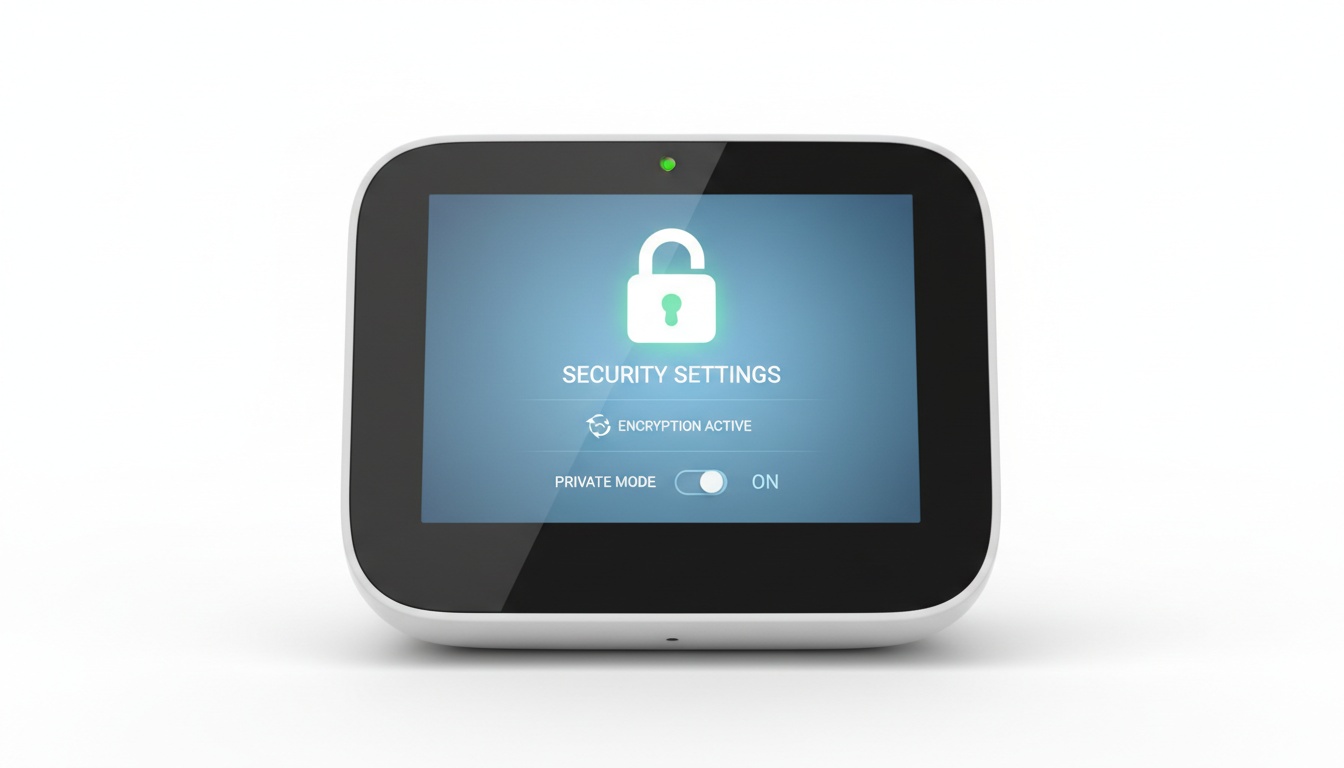
Security Features Comparison
Different brands take varying approaches to baby monitor privacy and security implementation:
- Encryption standards: Most leading brands now use WPA2 or WPA3 encryption
- Authentication options: Two-factor authentication availability varies by manufacturer
- Update policies: Firmware update frequency differs significantly across brands
- Known vulnerabilities: Track record varies for addressing security issues
Top-rated smart home devices consistently implement strong encryption and authentication as baseline security measures.
5. 7-Step Baby Monitor Security Checklist: Prevent Hacking in 15 Minutes
Four essential security measures dramatically reduce hacking risk: strong passwords, two-factor authentication, firmware updates, and network isolation.
Basic security measures dramatically reduce hacking risk.
• Password management — Create unique passwords for each device—never reuse credentials from other accounts. Use best password managers for families to generate and store complex passwords you can't remember.
• Two-factor authentication — Enable wherever available. Two-factor authentication adds a second lock: even if attackers crack your password, they can't access your account without your phone. This single step significantly reduces breach risk according to security research.
• Firmware updates — Patch known vulnerabilities. Enable automatic updates if available, or check monthly for new versions. Routers using WPA2 or WPA3 encryption provide better protection than older WEP standards.
• Network security — Set up a separate IoT network for smart devices, isolating them from computers containing sensitive data. VPN routers for home IoT security add another layer of encryption for all connected devices.
Advanced Security Measures Beyond Basic Protection
Network segmentation creates separate virtual networks within your home. Isolating your baby monitor on a separate network means if it's compromised, attackers can't spread to your computers, phones, or financial accounts—containing the damage to just that one device.
Monitoring tools can detect unauthorized access attempts. Router logs show connection patterns—unusual activity at 3 AM might indicate compromise.
Regular security audits involve checking connected devices, reviewing access logs, and testing password strength. Schedule quarterly reviews to catch issues before they become problems.
What to Do AFTER Discovering Your Baby Monitor Has Been Hacked
Immediate response requires disconnecting the device from your network and changing all related passwords. Document everything—screenshots, log files, timestamps—for potential law enforcement reports.
Forensic analysis helps determine the scope of compromise. Check router logs for suspicious connections, review other devices on your network, and scan for malware that might have spread.
Incident response includes notifying the manufacturer, filing police reports if criminal activity occurred, and contacting your insurance company about potential liability coverage.
Recovery involves factory resetting the device, updating firmware, implementing stronger security measures, and monitoring for recurring issues.
Insurance and Liability Implications for Parents
Most homeowner's insurance policies don't explicitly cover baby monitor breaches, but some cyber liability policies include smart home device coverage.
Document any financial losses from identity theft or fraudulent charges. Keep records of security improvement costs—some insurers offer discounts for proactive cybersecurity measures.
Consider the emotional impact on your family. Some policies include counseling coverage for privacy violations involving children.
6. Offline vs. WiFi: Which Gives You Better Peace of Mind?
Offline baby monitors eliminate remote hacking entirely but sacrifice smart features like remote access and cloud recording.
The security benefits of audio-only monitors deserve careful evaluation.
For parents who want peace of mind without the complexity of Wi-Fi security, audio-only solutions with on-device processing eliminate remote hacking entirely.
The Eufy Spaceview and Summer Infant Pixel Zoom provide video monitoring with local storage, offering enhanced security with convenience.
Trade-offs include losing remote access features, cloud recording, and smartphone integration. You can't check on your baby from work or receive push notifications when away from home.
Looking ahead, smart home security continues evolving. Emerging standards like Matter promise better interoperability and security, while manufacturers implement zero-trust architectures and hardware security modules.
The Wyze Cam v3 paired with a separate audio monitor offers a hybrid approach—video recording for home use with limited connectivity requirements.
For families prioritizing absolute security over convenience, dedicated audio monitors remain a straightforward option. For those wanting smart features with wellness analytics, proper security implementation makes Wi-Fi monitors acceptably safe for general monitoring purposes.
7. Emerging Security Standards and Certifications to Look for in 2026
Several emerging security standards help parents identify properly secured baby monitors: Matter certification, cybersecurity certifications, WPA3 encryption, and hardware security modules.
Matter certification is an emerging standard for interoperability and security. While still developing, some manufacturers are working toward Matter certification for their smart home devices, though adoption in baby monitors specifically varies.
Cybersecurity certifications specifically address security for IoT devices. These emerging standards help parents identify properly secured products.
WPA3 encryption is the latest standard, though WPA2 remains widely used and considered secure for most home networks. Avoid devices still using older WEP protocols.
Hardware security modules (HSMs) provide tamper-resistant key storage. Premium baby monitors increasingly include these chips for enhanced protection.
Regular third-party security audits demonstrate manufacturer commitment to ongoing protection. Look for brands that publish annual security reports.
8. Legal Precedents and Law Enforcement Response Patterns
Baby monitor hacking cases fall under federal jurisdiction when crossing state lines, but most individual incidents result in limited investigation due to resource constraints.
Federal jurisdiction applies when baby monitor hacking crosses state lines or involves organized criminal activity. The FBI's Internet Crime Complaint Center (IC3) handles major cases.
State and local response varies dramatically. Urban areas typically have dedicated cybercrime units, while rural jurisdictions may lack specialized expertise.
Civil liability remains unclear for manufacturers. Courts haven't established consistent standards for baby monitor security obligations.
International cooperation becomes necessary when attackers operate from foreign countries. This significantly complicates prosecution efforts.
Parents should understand that individual baby monitor breach cases rarely result in criminal charges unless part of larger criminal enterprises.
9. Key Takeaways
- Baby monitor hacking incidents appear to be relatively infrequent despite media attention
- Default passwords and unpatched firmware create the biggest vulnerabilities
- Offline monitors eliminate remote hacking but sacrifice smart features
- Nanit and Owlet rank among the stronger options in security implementation among connected monitors
- Basic security hygiene provides substantial protection for most families
- Document everything if you suspect compromise
The thought of a stranger watching your sleeping baby triggers primal fear. I get it—I'm a parent too.
But the fear of baby monitor hacking shouldn't drive parents away from helpful technology. Smart implementation of basic security measures provides protection equivalent to other connected devices in your home.
The key is balancing reasonable precautions with practical convenience for your family's needs.
Ready to simplify? Consider solutions that run sound detection locally on your device rather than in the cloud, with any camera use opt-in instead of always-on: fewer hacking vectors, no continuous feed to intercept. Get sound event notifications that help you stay aware of your baby's activity.