
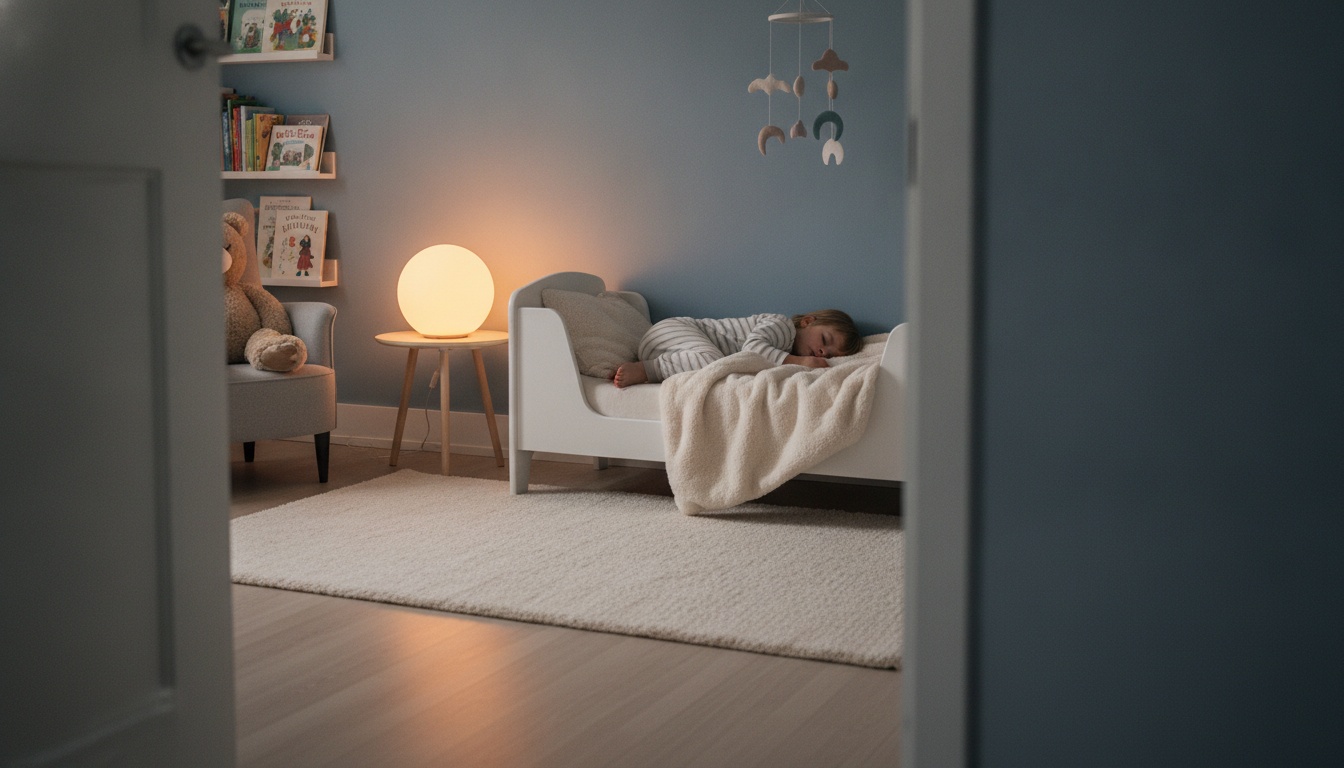
1. Why Baby Monitors Matter — And When They Stop Being Necessary
Baby monitors close the communication gap when infants can't call out, walk to you, or get help independently. This gap is widest in the first year but narrows after 12 months as children develop verbal skills and mobility.
After 12 months, that gap starts narrowing.
A video monitor and an audio monitor solve different problems, which changes the stopping calculus. Audio tells you your child is making noise (or isn't). Video tells you why — and for parents managing the [INTERNAL_LINK: crib-to-toddler-bed transition], that visual context matters more than most people expect.
2. The Real Cost of Continuing Past the Point of Safety
There's a practical angle worth naming before the age breakdown: most baby monitors run $80–$300 (as of 2026), and the subscription-based ones — Nanit, Owlet — add $10–$20/month on top of hardware costs. Continuing past the point of safety necessity isn't free. This isn't a reason to stop prematurely, but it's a reason to be honest about whether you're paying for safety or paying for comfort.
- Subscription monitors cost $10–20/month on top of hardware
- Extended use can delay children's development of self-regulation skills
- Stopping too early removes genuine safety function
The Developmental Cost of Staying Too Long
The deeper issue is developmental, not financial. Children develop independence partly by navigating small nighttime moments without immediate adult intervention. A toddler who learns to resettle, roll over, or call out and wait — rather than triggering an immediate parental response — is building age-appropriate self-regulation skills. This isn't a reason to rip the monitor out at 18 months. It's a reason to wean intentionally when the time comes.
On the flip side, stopping too early is a real risk. A child who can't reliably call out, can't navigate to your room, and has no way to signal distress is genuinely less safe without monitoring. The safety function isn't symbolic.
3. Age-Based Guidelines: When It's Safe to Consider Stopping
Neither the AAP nor the NHS provides a hard cutoff age for baby monitors — a deliberate choice that reflects how much individual development varies. Where NHS guidance on baby and toddler sleep addresses parental judgment and a child's ability to communicate needs, the emphasis is on individual circumstances rather than a fixed age. The AAP's focus in this area tends toward safe sleep practices for infants broadly, with individual child development and parental judgment as recurring themes, though their guidance does not address monitor cessation specifically.
Both are frustrating if you want a clean answer, but honest. The realistic window — 18 months to 3 years — exists because development doesn't follow a calendar.
If you're in this window and looking to simplify, [INTERNAL_LINK: audio-only monitoring] removes the visual checking loop while keeping the safety function that actually matters.
12–18 Months: Too Early for Most Families
At 12 months, most children are still in cribs, still developing verbal communication skills, and in the thick of separation anxiety. Many parents who try stopping at this stage report returning to the monitor within a few weeks — the safety function is still genuinely useful, and the verbal and mobility milestones that make stopping practical haven't arrived yet.
Save yourself the experiment.
What you can do at this stage is reduce compulsive overnight checking — every 45-minute app refresh isn't making your child safer. Keep the monitor. Change how you use it.
At 12 months, you're almost certainly not there yet. The next window — 18 to 24 months — is where the decision actually gets interesting.
18–24 Months: The First Realistic Window for Many Families
18–24 months is often the first realistic window to consider if your child sleeps through the night, can vocalize distress loudly enough to carry through a door, and shows no recent illness or [INTERNAL_LINK: sleep regression]. That said, readiness depends heavily on individual development — treat this window as a general guide rather than a clinical prescription.
Children generally tend to become more verbally capable and physically independent somewhere between 18 and 24 months — which is why this window tends to be where the monitor conversation starts for many families. That said, individual development varies considerably, so treat this window as a general guide rather than a clinical prescription.
Room setup matters here too. If your child's room is directly across a short hallway, sound carry-through may already make the monitor redundant. A separate room on a different floor warrants longer monitoring: the physical distance is a genuine safety variable, not just a comfort preference.
2–3 Years: The Comfortable Majority Window
By age 2, many children have developed enough verbal ability and mobility that monitoring becomes optional rather than essential for typical development — though this varies widely. The [INTERNAL_LINK: crib-to-toddler-bed transition] often happens in this range — and once your child can physically climb out of bed and walk to your room, their own mobility largely replaces the monitor's safety function.
By age 3, many children sleep independently without any monitoring support. A video monitor at this stage may still offer parental comfort, and that's a legitimate use of the tool, but it's no longer a safety necessity for most families.
Does a 5-Year-Old Need a Baby Monitor?
No. By age 5, children can communicate needs, navigate in the dark, and understand danger. Continued use is almost always about parental anxiety, not child safety.
Worth being honest about. Not guilty about — but honest.
Exceptions exist: developmental delays that affect communication skills, medical conditions requiring overnight observation, or significant anxiety in the child itself. Those circumstances warrant a different framework entirely.
4. Key Safety Milestones That Signal Readiness
Age is a rough proxy. These milestones are the actual signal.
Your child is ready when they:
- Sleep through the night without intervention, most nights
- Can call out loudly enough to be heard from your room with the door ajar
- Understand "come get me if you need something" — and have actually done it at least once
- Have transitioned or are clearly ready to transition from crib (can climb out independently). If they can't yet, this checklist doesn't apply — you're not there.
- Have no active medical conditions requiring overnight observation. If they do, skip to the Special Circumstances section below.
What This Means in Practice
One counterintuitive point: climbing out of the crib is simultaneously a readiness signal and a new hazard. During the transition period — the two to four weeks after you move to a toddler bed — keeping the monitor running is actually smarter, not redundant. You're watching for falls and disorientation, not just checking sleep quality.
Your child knowing to call for help matters. So does your own confidence that you'd hear them. Both conditions need to be true — not just one.
5. Smart Monitor Features and the Stopping Calculus
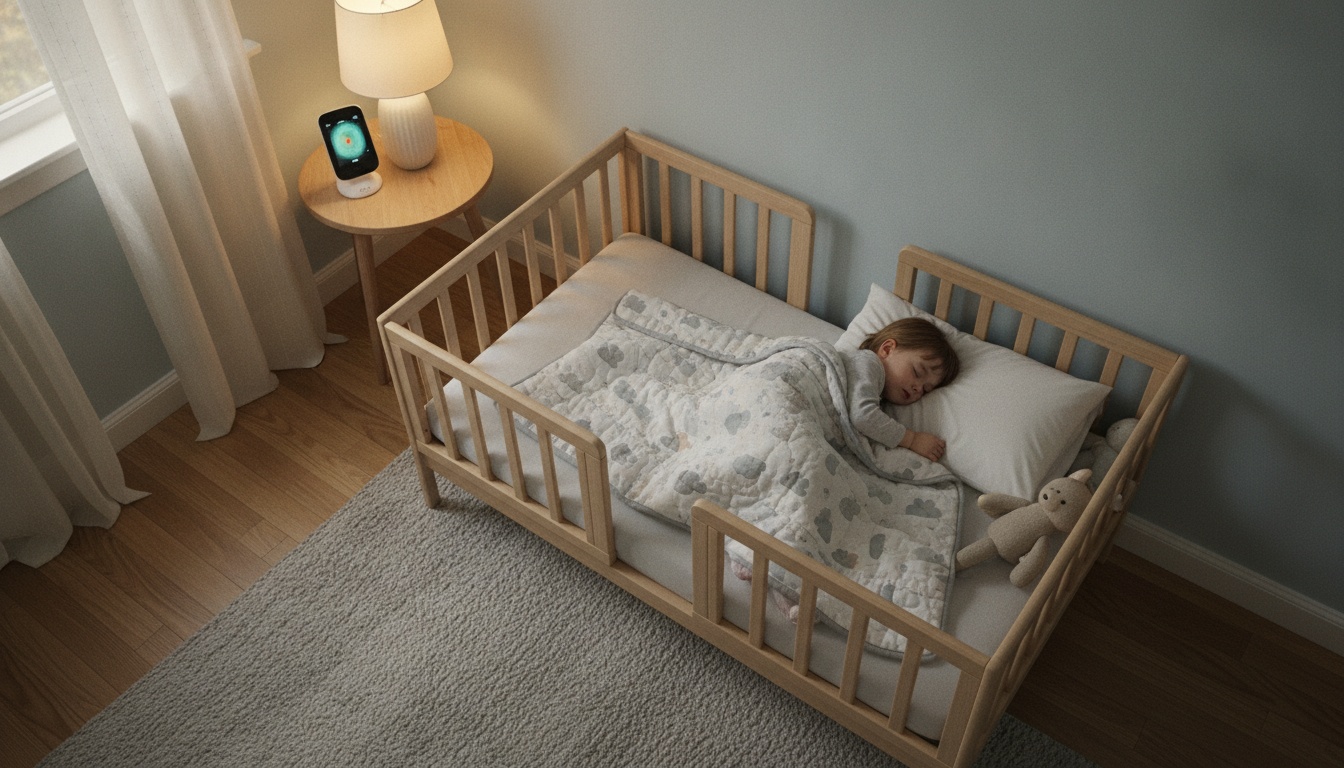
Smart monitor features — advanced health tracking, AI sleep analytics, face detection — don't extend the safety window. They extend the comfort window. A healthy 2-year-old who sleeps through the night doesn't need these features, but weaning off data you've relied on for reassurance takes intention.
Monitors like the Owlet Dream Sock include advanced health-tracking features — but that real-time data often extends the comfort window longer than your child's actual safety needs it. The Nanit Pro's AI analysis generates sleep reports that feel like expert insight, but for most families, that data is comfort, not safety. Cubo Ai Plus includes face-detection alerts — a feature some parents find useful during the crib-to-toddler-bed transition, but less relevant once your child can roll independently.
These features change what parents are monitoring for, which changes when stopping feels acceptable. If you've been relying on advanced tracking data for reassurance, stopping the monitor isn't just about whether your child can call out. It's about whether you're ready to give up that data stream. This represents a different psychological transition than unplugging a basic audio monitor.
For a broader look at how these devices compare, [INTERNAL_LINK: best baby monitors] covers the full field — including which features actually matter past the newborn stage.
6. Parental Factors: Anxiety, Room Setup, and Family Comfort Level
Parental anxiety is a legitimate variable in this decision. Not something to dismiss, not something to be embarrassed about.
The distinction worth making: functional monitoring (the monitor is serving your child's safety) versus anxiety-driven monitoring (the monitor is managing your nervous system). Both are real. Only one of them scales with your child's actual risk level.
Signs that anxiety has become the primary driver: you check the app more than once per hour after midnight, you can't fall asleep until the audio is running, or you feel genuine distress when the monitor battery dies. This self-awareness is useful — and a reason to wean intentionally rather than waiting for a perfect moment that never arrives.
If anxiety is the primary driver, [INTERNAL_LINK: an audio-only approach] can help you wean off the visual feed without giving up the safety net entirely.
Room Setup and Physical Distance
Your family comfort level matters too, and it's worth factoring in. A family in a large house with a child on a different floor has a different calculus than a family in a two-bedroom apartment. Neither is wrong. The physical setup is a real variable.
7. How to Wean Off the Baby Monitor: Gradual Reduction Strategies
Cold-turkey works for some families. Gradual reduction tends to work better for parents whose anxiety is part of the equation — which, honestly, is most of us.
For parents weaning off a subscription monitor, [INTERNAL_LINK: audio-only monitors] remove the data dependency without removing the safety function.
A 4-Week Gradual Reduction Plan
Week 1: Turn off the video feed at night. Keep audio only. This breaks the visual checking habit without removing the safety net entirely.
---
Week 2: Lower the audio volume — yes, this feels wrong, but do it anyway. Let natural sound carry-through do more of the work. You're testing whether you actually need the monitor or just think you do.
---
Week 3: Move from continuous audio to set check-in times: when you go to bed, and once around 2am if you're a light sleeper who'll do it anyway. The goal isn't perfection. It's breaking the loop of constant background noise that's been running in your bedroom for two years.
---
Week 4: Monitor off. Do a manual visual check before you sleep. Done.
The 4-week timeline is one approach, not a prescription. Some families move faster. The point is giving your nervous system time to recalibrate alongside the change — not white-knuckling through a single night of silence and declaring victory.
One parent described it this way: "We turned off the video on a Tuesday and forgot to turn it back on. That was it." Not everyone needs four weeks.
What to Do If Your Child Regresses After Stopping
Regression after stopping the monitor can have several causes — routine disruption, concurrent stressors, or simply the change in sleep environment itself. Reintroduce briefly without shame — this isn't failure — check for concurrent stressors like a new sibling or daycare change, and use positive reinforcement for independent sleep nights.
Children are pattern-sensitive. You changed something they could feel, even if they couldn't name it. If disruption persists beyond two weeks, a pediatrician consult is worth it.
Positive Reinforcement During the Transition
A sticker chart for "big kid sleep" nights works well for children 2.5 and up. Simple, tangible, age-appropriate.
Involve the child in the decision where you can. "You're sleeping so well, we don't need to watch the monitor anymore" lands differently than just quietly turning it off. Children respond to being treated as capable.
A nightlight as a transitional object is underused here. The monitor's glow and ambient noise become part of the sleep environment over months or years. Replacing that sensory element with something intentional — a soft nightlight, a white noise machine — eases the transition for the child and for you.
8. Special Circumstances: When Standard Timelines Don't Apply
Standard age guidelines don't apply to children with developmental delays, medical conditions, or significant anxiety. For these families, safety milestones matter more than age, and pediatrician recommendations override general guidance.
Developmental Delays and Medical Conditions
Children with developmental delays may not reach communication milestones on the standard timeline. For these families, safety milestones matter more than age: a child who can't reliably call out for help at age 3 isn't ready for the monitor to come down, regardless of what the average timeline suggests.
Medical conditions — seizure disorders, cardiac conditions, severe sleep disorders — may warrant indefinite monitoring with appropriate equipment. Always follow pediatrician recommendations for medically complex children. General guidance doesn't apply here, and it shouldn't.
For families navigating these decisions alongside [INTERNAL_LINK: developmental milestones], the standard age framework is a starting point, not a prescription.
Multiple Children and Sibling Dynamics
When an older child shares a room with a baby, the monitor is serving the baby's needs, not the older child's. That distinction matters when deciding whether to transition the older child off monitoring — the baby's developmental stage governs the decision.
Practically, transitioning the monitor to a new baby is straightforward:
- Most hardware holds up for several years of regular use
- Nanit Pro and Cubo Ai Plus both have secondary markets if you want to upgrade between children
- eufy offers local-monitoring baby monitor options that are practical for families cycling through multiple children — verify current models and specs directly with eufy, as product details vary by year
For families shopping for [INTERNAL_LINK: best baby monitors for separate rooms], hardware choice affects the stopping decision. A monitor you've already paid off feels different to discontinue than one with an active monthly subscription.
Parental Anxiety Disorders
Situational new-parent anxiety is normal and time-limited. But when anxiety becomes clinical — when monitor use is actively reinforcing it rather than just reflecting it — that's a different situation entirely.
If stopping the monitor causes distress that feels disproportionate to your child's actual risk — not just uncomfortable, but genuinely destabilizing — that's worth discussing with a healthcare provider. It's not a parenting failure. It's an anxiety disorder behaving exactly as anxiety disorders do.
For parents dealing with [INTERNAL_LINK: postpartum anxiety], the monitor decision is often a symptom, not the root issue. Worth addressing directly.
A practical middle ground: set a hard "off" time for the monitor (11pm, after your last check) rather than leaving it running all night. This reduces the compulsive checking loop while keeping the safety function during the early-evening window before your child reaches deep sleep — when most parents report needing to intervene.
---
9. Key Takeaways
Readiness is about milestones, not age
- Sleeping through the night consistently
- Able to call out loudly enough to be heard from your room
- Physically capable of coming to you if needed
Weaning gradually works better than cold-turkey
- Video off → audio low → check-ins → off
- Regression after stopping can have multiple causes — it's not a sign to give up
- Reintroducing briefly is fine — it's not failure
Smart features extend comfort, not safety
- By age 5, continued use is almost always parental anxiety
- For developmental delays or medical conditions, follow pediatrician guidance — not this article
Ready to make the transition? [INTERNAL_LINK: audio-only monitors] are worth exploring as a stepping-stone option — check current availability and features directly, as product offerings change over time.