

1. Why Wake Windows Matter at 6 Months (And How They Fix Nap Resistance)
A wake window is the stretch of time between one sleep period ending and the next one beginning. Simple concept, surprisingly hard to execute.
At 6 months, the circadian rhythm is actively maturing and sleep consolidation is happening in real time. A wave of developmental milestones — rolling both ways, sitting with minimal support, babbling strings of "bababa" and "dadada" — is simultaneously loading the nervous system with new stimulation . That stimulation is why the 4-month wake windows of 1.5–2.5 hours no longer hold. The baby needs more awake time now to build enough sleep pressure for quality naps and solid nighttime sleep.
Why Timing Matters: Undertired vs. Overtired
Too short a wake window and you put an undertired baby down. They'll play in the crib, take a long time to fall asleep, and nap briefly. Too long and you've got an overtired baby — cortisol spikes, the nervous system goes haywire, and suddenly a baby who was rubbing their eyes 20 minutes ago is bouncing off the walls and impossible to settle.
This developmental flux explains why wake windows feel inconsistent right now — they're supposed to be shifting. This age also sits near the 3-nap to 2-nap transition zone. Some babies this age are still solidly on three naps; others are starting to fight the third. Both are normal.
The American Academy of Sleep Medicine and the AAP both recommend around 14 hours of total sleep per 24 hours for babies 4–12 months old. For most 6-month-olds, that breaks down to roughly 11–12 hours at night and 2.5–3.5 hours of daytime sleep spread across naps .
---
2. The 2–3 Hour Rule: Why This Range Stops Nap Battles and Fixes Early Waking
The 2–3 hour range isn't a fixed number. It's a range for a reason.
Wake windows typically increase as the day progresses. The first window after morning wake-up is the shortest — around 2 hours — because the baby is coming off the longest sleep of the night and sleep pressure is at its lowest. By the final window before bed, most 6-month-olds need closer to 2.5–3 hours to build enough sleep pressure for a solid overnight stretch.
A rough daily progression looks like this: Wake → [2 hrs] → Nap 1 → [2–2.5 hrs] → Nap 2 → [2–2.5 hrs] → Nap 3 → [2–2.5 hrs] → Bed. The windows grow gradually. No single jump should be dramatic.
Individual variation is significant, though. A high-needs or sensitive baby often caps out at the lower end of the range. An easygoing baby with strong sleep pressure may push comfortably to 3.25 hours before showing any tired signs. Neither one's a problem — they're just different calibrations, and no chart accounts for your specific baby's temperament.
The contrarian point worth making: clock-watching alone will fail you. Parents who set a 2-hour timer and put the baby down regardless of cues get inconsistent results. Use the clock as a guardrail and the cues as the trigger. Both. Not one or the other.
How to Read Your Baby's Tired Signs
Early tired signs are subtle: gaze aversion (looking away from stimulation), slowing movements, a glassy-eyed stare into the middle distance, one or two yawns. These are the green light to start the wind-down routine.
Late tired signs are the ones most parents recognize — eye rubbing, arching the back, fussiness, and that paradoxical burst of hyperactivity that looks like a second wind but is actually cortisol flooding the system.
Start the wind-down at the first sign, not the second. By the time arching and crying appear, you've missed the window by 10–15 minutes and settling will take twice as long.
---
3. Ready-to-Use Schedules: 3-Nap vs. 2-Nap (Copy & Adjust for Your Baby)
Most 6-month-olds follow either a 3-nap or 2-nap schedule, depending on developmental readiness. At 6 months, your baby is either solidly on three naps or beginning to show signs of the transition to two. Both are developmentally appropriate. The schedules below assume a 7:00 AM wake time — adjust every time block proportionally if your baby wakes earlier or later.
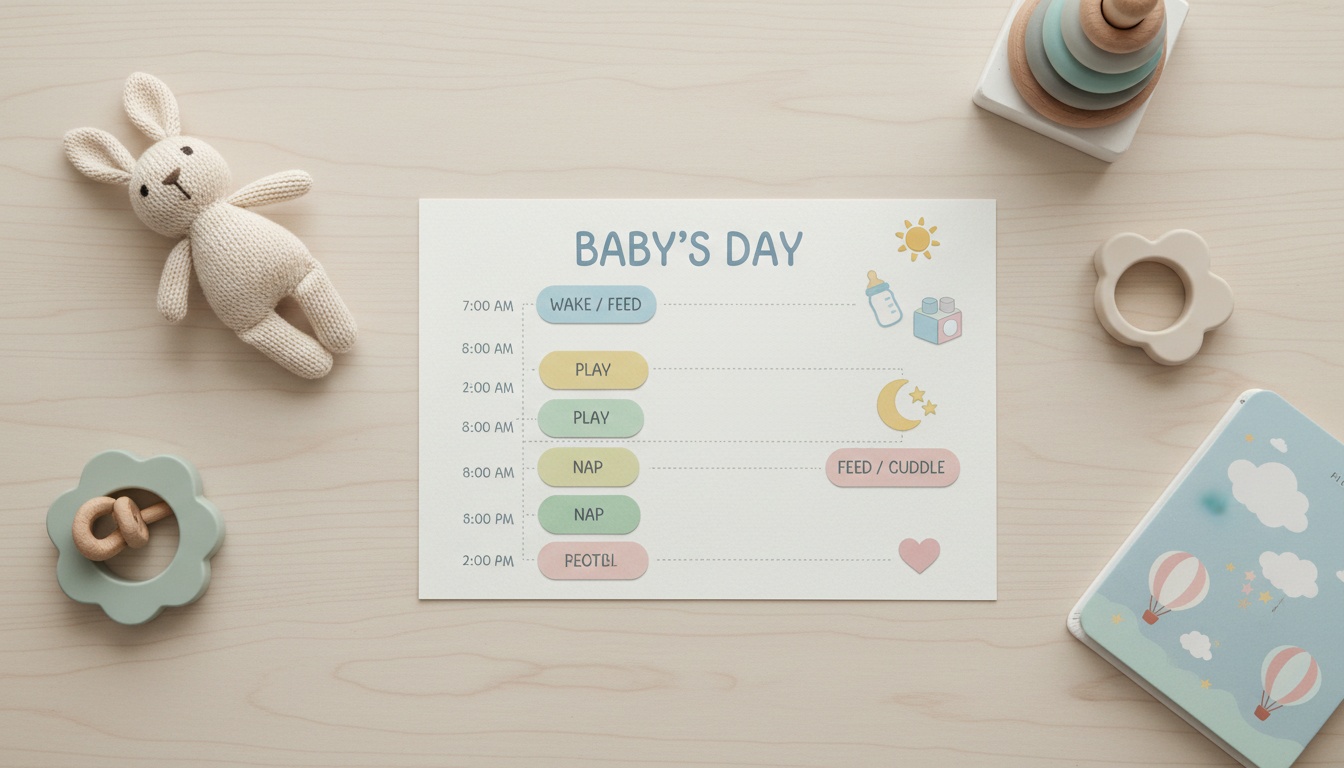
Swipe right on mobile to view full tables.
3-Nap Schedule
| Time | Event | Wake Window |
|---|---|---|
| 7:00 AM | Wake for the day | — |
| 9:00 AM | Nap 1 (60–90 min) | 2 hours |
| 10:30–11:00 AM | Wake from Nap 1 | — |
| 12:30–1:00 PM | Nap 2 (60–90 min) | ~2 hours |
| 2:00–2:30 PM | Wake from Nap 2 | — |
| 4:00–4:15 PM | Nap 3 (30–45 min) | ~2 hours |
| 4:45–5:00 PM | Wake from Nap 3 | — |
| 7:00–7:30 PM | Bedtime | 2.5 hours |
The third nap is intentionally short — 30 to 45 minutes. Its job is to bridge the gap to bedtime, not to be restorative. Cap it there even if the baby seems willing to sleep longer.
2-Nap Schedule
| Time | Event | Wake Window |
|---|---|---|
| 7:00 AM | Wake for the day | — |
| 9:30 AM | Nap 1 (60–90 min) | 2.5 hours |
| 11:00–11:30 AM | Wake from Nap 1 | — |
| 1:30–2:00 PM | Nap 2 (60–90 min) | ~2.5 hours |
| 3:00–3:30 PM | Wake from Nap 2 | — |
| 6:30–7:00 PM | Bedtime | ~3 hours |
On a 2-nap day, bedtime moves earlier — often 6:30 PM, sometimes 6:00 PM if the second nap ended short. That earlier bedtime is not a problem.
What is the earliest a 6-month-old can go to bed? For many 6-month-olds, bedtime often falls somewhere between 6:00–7:30 PM depending on the day's naps. Bedtimes that are too early can sometimes shift the circadian anchor and contribute to early morning waking, though individual babies vary. On normal days, 6:30–7:00 PM is a commonly recommended target range.
Can a 6-month-old only have two naps? Yes. Some 6-month-olds are genuinely ready for two naps, particularly if they're consistently fighting the third or sleeping well for the first two. The 3-to-2 nap transition typically completes somewhere between 7–9 months for most babies, though individual timing varies and some babies show readiness earlier or later .
One feeding note: feed the baby after waking from sleep, not right before going down. Feeding right before sleep creates a feed-to-sleep association and muddies your wake window timing — you can't tell if the baby is tired or just milk-drunk. If the baby falls asleep while feeding, gently rouse them before the full transfer to the crib; even a brief stir breaks the sleep association enough to matter.
Get the schedule right and the troubleshooting section below becomes mostly irrelevant — but here's what to do when it isn't.
---
4. How to Troubleshoot When Wake Windows Aren't Working
The frustration is real — and I hear the same version of it constantly. Parents post on Reddit about "struggling SO much with naps" at exactly this age, and when I dig into the details, the problem is almost always a wake window mismatch. One parent described it this way: "We were doing everything right — dark room, white noise, same routine — and naps were still 30 minutes. Turned out the wake window was 20 minutes too short. Extending it fixed the problem in four days." That's the pattern. Either the windows are off, or the day's schedule has accumulated enough small errors to derail the final sleep.
Quick Diagnostic Checklist
- Does baby play contentedly in the crib for 20+ minutes at nap time? → Undertired (extend wake window by 15 min)
- Does baby cry immediately when put down, arch the back, or seem frantic? → Overtired (shorten last wake window by 15 min, or pull bedtime earlier)
- Is baby waking before 6:00 AM consistently? → Check last wake window length and bedtime (often both need adjustment)
- Has baby been fighting the third nap for more than 7–10 days straight? → Consider starting the 2-nap transition
Evening Struggles and Bedtime Battles
Two causes, different fixes. If the last wake window is too long (say, 3.5 hours when the baby needs 2.5), cortisol has built up and you're fighting an overtired baby. Trim the last window by 15 minutes and hold that for three days before evaluating.
If naps have been short all day, cumulative sleep debt hits by evening. Pull bedtime 30 minutes earlier rather than trying to extend the last window.
If naps have been short all day, the problem compounds — here's what that looks like at nap time.
Nap Resistance
Baby plays happily in the crib for 30+ minutes? Undertired — wake window was too short. (This is the one parents almost never guess. They assume a happy baby in the crib means the baby is tired but "self-settling." Nope — happy crib play at nap time is almost always an undertired signal.) Baby cries immediately, arches, or seems frantic? Overtired — you missed the window. The distinction matters because the fixes are opposite.
Both of these patterns, if left uncorrected, tend to surface as early morning waking.
Early Morning Waking
Early morning waking is often associated with overtiredness rather than an early bedtime. Many parents find that moving bedtime earlier — to 6:30–7:00 PM — can help shift the pattern, though individual babies vary and results differ. If early waking persists, talk to your pediatrician.
It sounds backwards. But early morning wakes are often caused by a last nap that ended too early (creating too much wake time before bed) or by bedtime being too late, not too early. Once you've adjusted bedtime and the early waking pattern shifts, using a simple audio monitor on a spare device can help you track nap timing passively — especially helpful during regressions when patterns shift. BabyRadar turns a spare iPhone into a nap-timing tracker so you're watching patterns, not a timer.
The 6-Month Sleep Regression
The 6-month sleep regression is real, but it's typically milder than what came before. It's driven by developmental milestones — object permanence clicking into place, the physical demands of learning to sit up — rather than a structural change in sleep architecture. It usually lasts 1–3 weeks and responds well to consistency.
What is the hardest baby regression? The 4-month regression — that one involves a significant change in how babies cycle through sleep stages, and many of those changes are lasting . Nothing at 6 months comes close to that level of disruption. The 6-month version: hold the schedule, adjust in 15-minute increments only, and ride it out.
When Illness or Teething Disrupts Wake Windows
Sick babies and teething babies need more grace than the schedule allows. Total sleep needs don't change, but the ability to achieve them does.
During illness, shorten wake windows by 15–20 minutes across the board: sleep pressure builds faster when a baby is ill. During teething, the disruption is usually overnight rather than at naps; keep the nap schedule as consistent as possible and expect a few rough nights. Once symptoms resolve, return to the age-appropriate schedule within 2–3 days rather than letting the disrupted pattern calcify.
---
5. How to Track Wake Windows (And What to Do During Awake Time)
How you fill a wake window matters as much as how long it runs. The rough shape of a good wake window looks like this: calm feeding → active play → wind-down routine → sleep. Front-loading stimulation and then trying to wind down in five minutes doesn't work.
Sleep tracking apps are frequently discussed in communities like Reddit's r/sleeptraining and r/babysleep, and some include features that do the wake window math for you. The risk with any app is over-tracking — refreshing the timer every five minutes instead of watching the baby. Use the tool to anchor your sense of time, not to replace observation.
Many parents also repurpose a spare iPhone as an audio monitor to track nap timing passively. BabyRadar runs on a phone you already own, with no additional hardware required.
Best Activities for 6-Month-Old Wake Windows
Age-appropriate activities for 6-month-olds include tummy time (still important for motor development), sensory play with different textures, mirror play (babies this age are genuinely fascinated by their own reflection), and face-to-face babbling exchanges. Front-loading physically engaging activities — floor play, tummy time — and ending with calmer sensory interaction helps build sleep pressure without overstimulating the nervous system before the wind-down.
Morning light exposure — even 10–15 minutes near a window — anchors the circadian rhythm by suppressing melatonin production, which makes the eventual sleep pressure at nap time more effective.
Cut screens and loud flashing toys in the 20 minutes before a nap. The nervous system needs a ramp-down, not a ramp-up.
Do Contact Naps Count Toward Wake Windows?
Yes. A 6-month-old who only naps on a parent or in a carrier is still getting the sleep they need. The nap schedule still applies; the location doesn't change the wake window math. If you're working toward independent naps, that's a separate goal from getting the windows right — tackle one at a time.
When to be rigid vs. flexible: Be rigid during sleep regressions and nap transitions. The nervous system adapts faster when the nap schedule is consistent. Be flexible for one-off days — travel, illness, a growth spurt that disrupts everything. One bad day won't derail the schedule. A week of inconsistency will.
What is the 5-3-3 rule for babies? The "5-3-3 rule" is sometimes referenced in parenting communities as a sleep training method — not a wake window strategy. It is not a widely recognized or standardized approach in pediatric sleep literature; established methods like Ferber use progressively increasing check-in intervals rather than a fixed pattern. Any timed-interval method is used alongside an age-appropriate schedule during sleep training, not as a replacement for it.
---
6. When to Adjust Wake Windows: 3 Signs Your Baby Has Outgrown the Schedule
Here's what I tell parents who message me saying the schedule "just stopped working" around 6.5 months: the schedule didn't break. The baby outgrew it.
Wake windows aren't set-and-forget. They creep upward as baby sleep development progresses, and a schedule that worked perfectly at 5.5 months may be producing short nap cycles and nighttime waking by 6.5 months.
Signs wake windows are too short (undertired): Baby plays happily in the crib, takes 30+ minutes to fall asleep, naps under 30 minutes, wakes early in the morning and seems rested.
Signs wake windows are too long (overtired): Baby cries at sleep time, arches the back, shows hyperactivity before naps, wakes frequently overnight, and is hard to settle even when clearly exhausted.
Adjust in 15-minute increments. Wait at least three days — ideally five — before evaluating whether the change worked. Jumping 45 minutes at once creates new problems faster than it solves old ones.
Signs baby is ready to drop to 2 naps: Consistently fighting the third nap for 7–10 days in a row, the third nap pushing bedtime past 8:00 PM, and the first two naps being long and restorative. Most 6-month-olds aren't quite there yet — the typical 3-to-2 nap transition falls somewhere between 7–9 months for most babies, though individual timing varies — but some babies show readiness earlier .
By 8 months, wake windows for many babies will begin stretching longer as sleep consolidation matures further, though the exact range varies significantly between individual babies. The nap schedule that works now will need another adjustment then.
Individual variation is real, and it's large. Some babies genuinely need 1 hour 45 minutes between sleep periods at this age; others handle 3 hours without a fuss. The goal isn't a perfect schedule that matches a chart. The goal is a rested, happy baby .
Once your wake windows are dialed in, you can use a simple audio monitor to passively track nap timing — especially helpful during regressions when patterns shift. BabyRadar turns a spare iPhone into a nap-timing tracker so you're watching patterns, not a timer.
---
7. Key Takeaways
- Most 6-month-olds need 2–3 hours of awake time between sleep periods, with the first window shortest and the last window longest
- Wake windows increase gradually across the day — don't apply the same number to every gap
- At 6 months, both 3-nap and 2-nap schedules are normal; the transition typically completes between 7–9 months for most babies, though individual timing varies
- Bedtime between 6:30–7:30 PM is appropriate; earlier (6:00 PM) is fine on short-nap days
- Adjust wake windows in 15-minute increments and wait 3–5 days before evaluating changes
- Read sleep cues alongside the clock — neither alone is reliable
- The 6-month sleep regression typically lasts 1–3 weeks; hold the schedule and adjust by small increments only