
1. What Are Wake Windows and Why Do They Matter at 3 Months?
A wake window is simple: the time your baby is awake between the end of one sleep period and the start of the next, per Taking Cara Babies. Start the clock when they open their eyes. Stop it when they're down again.
Timing matters because of sleep pressure. Keep a baby awake too long and they tip into overtiredness, a state where the nervous system is too activated to settle, making it harder, not easier, to fall and stay asleep. The overtired spiral is real. Once you're in it, the rest of the day tends to unravel.
Wake Windows vs. Clock-Based Schedules
Wake windows are different from scheduling by the clock. A rigid timetable says "nap at 9:00am." Wake windows say "nap roughly 75–90 minutes after wake-up, wherever that lands today." Baby-led anchors flex with early wake-ups and late mornings. This flexibility matters especially at three months, which is a turning point.
At three months, daytime sleep starts consolidating into something more structured. Before that, most babies cycle through short bursts — feed, sleep, repeat. The jump to 75–120 minute windows feels significant because it is.

The 75–120 minute range previews what's coming: a baby who can handle more awake time, but still needs careful calibration. Individual variation is the main theme here. The range is wide for a reason.
---
2. How Long Should a 3-Month-Old's Wake Window Be?
Why the Last Wake Window Is Always the Longest
A 3-month-old's wake window is typically 75 to 120 minutes, according to Cara Dumaplin, a certified pediatric sleep consultant and founder of Taking Cara Babies. Most babies land closer to 75–90 minutes for the first window of the day, then stretch toward 90–120 minutes before bed as sleep pressure accumulates. Watch your baby's sleep cues — the number is a range, not a prescription.
The range widens across the day for a straightforward reason: sleep pressure builds. A baby who's been awake since 7:00am has more biological drive toward sleep by 11:00am than they did at 8:00am. That's why the last wake window before bedtime is typically the longest. Not because you're pushing them, but because their body is ready.
Compare that to the newborn stage. At 0–4 weeks, most babies max out around 30–60 minutes of awake time before they're done, per Taking Cara Babies. By 4–12 weeks, that stretches to 60–90 minutes. The jump to 75–120 minutes at three months is real progress.
Wake Windows by Age: A Quick Comparison
| Age | Typical Wake Window Range |
|---|---|
| Newborn (0–6 weeks) | 30–60 min |
| 6–8 weeks | 60–75 min |
| 3–4 months | 75–120 min |
| [4–5 months](internal-link-placeholder) | 90–120 min |
| 6 months | 2–3 hours |
One thing the table doesn't show: the 3–4 month range is deliberately wide because this is a transition period. A baby at exactly 12 weeks may still be running on 75-minute windows. The same baby at 15 weeks might be pushing 110 minutes without blinking.
A note on corrected age. If your baby arrived early, use corrected age, not chronological age, when setting wake window expectations. A baby born 6 weeks premature who is now 3 months old (chronological) is closer to 6 weeks corrected. Their wake windows should reflect that, not the 75–120 minute range.
Stretching wake windows should happen gradually. Push by 5–10 minutes at a time, watch for sleep cues, and give it a few days before adjusting again. Sleep consolidation doesn't happen overnight.
How to Track Wake Windows in Practice
Knowing the range is one thing. Actually timing it at 3:00am is another. The simplest method: start a phone timer the moment your baby opens their eyes. When the timer hits 60 minutes, start watching for sleep cues. When you see them, begin wind-down — don't wait for the full 90 minutes if your baby is already signaling.
Some parents use a notebook log for the first week or two, tracking wake time, sleep time, and mood at nap start. Patterns emerge fast. A few days of data tells you more than any chart.
Transitioning from Newborn to 3-Month Wake Windows
Don't jump from 60-minute newborn windows to 90-minute three-month windows overnight. That's a recipe for an overtired wreck of a Tuesday. Extend by 5 minutes every 3–4 days, watching your baby's response at each increment. If they're settling easily and napping well, hold there for a few days before pushing further. If they're fighting sleep or waking short, you may have moved too fast.
---
3. How to Read Your Baby's Sleep Cues and Find Their Personal Sweet Spot
The 75–120 minute range gets you in the ballpark. Baby temperament, feeding method, and developmental stage tell you where to aim within it.
Reading the Room: Temperament, Feeding Method, and Developmental Stage
High-need or sensitive babies often need to stay at 75–80 minutes well into month three. Easy-going babies may cruise comfortably at 100 minutes by week 13. Both are normal. Your specific baby, on this specific Tuesday, is telling you more than any chart can.
Feeding method shifts the picture too. Breastfed babies often have slightly shorter wake windows; bottle-fed babies may tolerate the upper end of the range more easily. Neither is better. They're just different starting points for your calibration. (These patterns aren't universal, but they're worth knowing as a starting hypothesis when your baby's windows feel off.)
Overtired vs. Undertired: How to Tell the Difference
Here's what trips most parents up about overtired babies: they don't look tired. They look wired. The eye rubbing and arching come later — by then you've already missed the window.
Signs your baby is overtired (wake window was too long):
- Eye rubbing, ear pulling — often the first visible signal
- Arching the back and stiffening — the nervous system is past its limit
- Fussiness that escalates quickly — not hunger, not gas
- Glazed or unfocused stare — they've checked out
- Clusters of yawning — late-stage signal; don't wait for this one
Signs your baby is undertired (wake window was too short):
- Playing happily in the crib — resisting the nap entirely
- Short naps of 30 minutes or less — not enough sleep pressure to link cycles
- Taking a very long time to fall asleep — 20+ minutes of fussing
- Seeming alert and engaged when you start the wind-down
The overtired cycle is worth understanding. An overtired baby fights sleep even though they desperately need it. You've probably interpreted that fighting as "not tired yet" and extended the window further, which makes everything worse. That's the trap.
In practice, most parents who adjust wake windows by even 10 minutes report seeing the overtired spiral resolve within 3–5 days.
If you're finding it hard to track your baby's activity during the 3–4 month regression — a simple audio monitor app can help you stay aware of sound patterns without constant hovering.
Is a 30-Minute Nap Enough for a 3-Month-Old?
Short naps are developmentally normal at this age. If they're consistent and your baby seems rested and happy during wake windows, they're probably fine. If they're cranky and struggling, the wake window or sleep environment likely needs adjusting.
What If Your Baby Won't Stay Awake During the Wake Window?
Some 3-month-olds fall asleep mid-feed, in the car, or in the carrier — and suddenly your carefully timed wake window is a mess. Don't panic. A 10-minute accidental nap resets the clock; start your next wake window from when they wake up, not from when you intended them to sleep. If your baby is consistently falling asleep before the 60-minute mark, that's a signal the window is too long for where they are right now, not a scheduling failure.
For car-seat sleepers: if you know a drive is coming, time it toward the end of a wake window so the car nap counts as an intentional nap. Adjust from there.
---
4. Best Activities to Fill a 3-Month-Old's Wake Window
Wake windows aren't just waiting time. They're the primary developmental window your baby has each day.
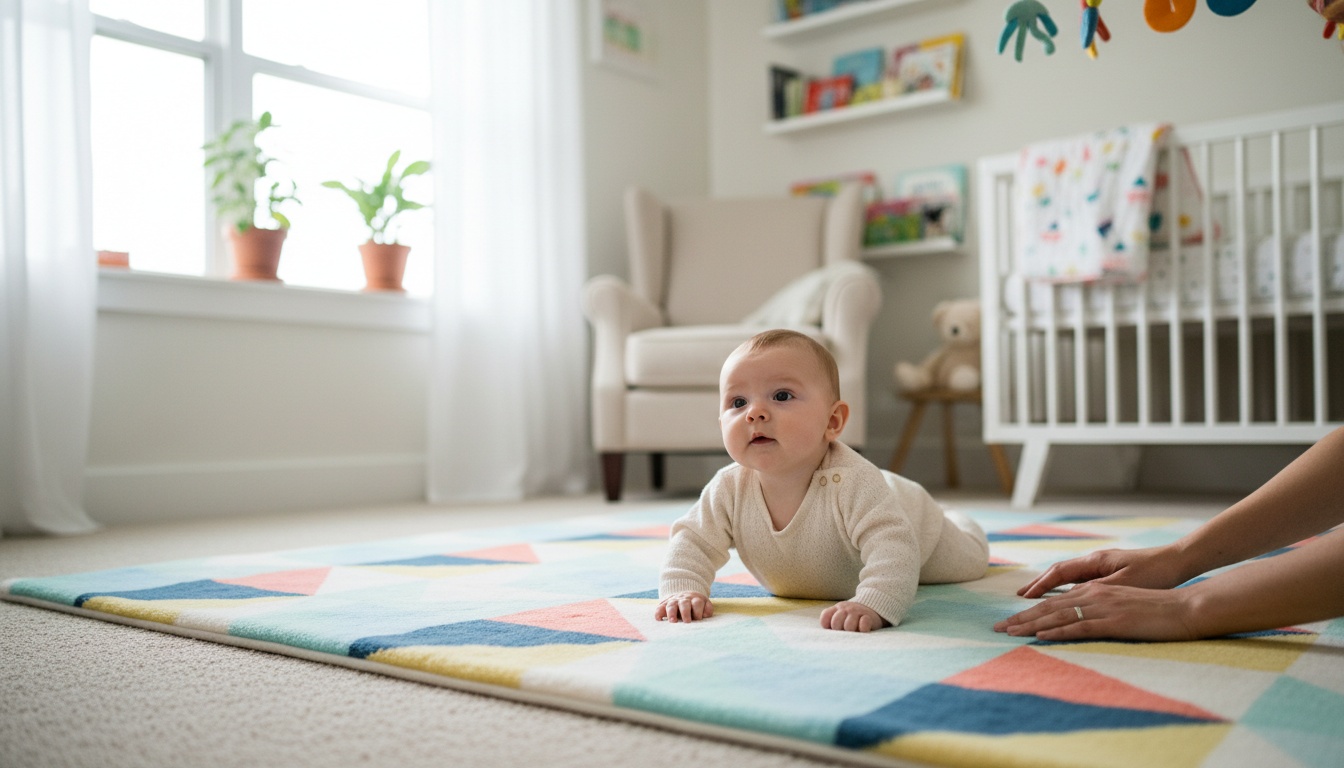
- Tummy time — 3–5 minute bursts several times per wake window. Directly tied to rolling milestones your pediatrician will check at the 4-month visit. Most 3-month-olds tolerate short and frequent sessions far better than one extended stretch.
- Face-to-face interaction — Uninterrupted face-to-face time promotes language development, per Taking Cara Babies. Talk, sing, mirror their expressions back. Research consistently links early face-to-face interaction to stronger language development by six months.
- Floor time on a play mat — Gives babies space to track visually, reach, and kick. Free play supports brain development as babies interact with objects in their own way. A simple black-and-white contrast mat works well for this age.
- Brief outdoor exposure — Even 10 minutes outside supports nighttime sleep quality by helping regulate circadian rhythm and melatonin production later in the day, per Taking Cara Babies. Ten minutes. That's it.
- Feed at the start of the wake window, not the end — This one feels backwards at first — I know. But feeding right after wake-up rather than right before sleep helps break the sleep association between nursing or bottles and falling asleep, which can cause night waking later. Your baby is also more alert and feeds better when not already drowsy.
Some parents also find it easier to track wake window timing and sound patterns during independent play using a monitor app — particularly useful when you're in another room and can't observe your baby directly.
Watch for gaze aversion — when your baby looks away, turns their head, or gets fussy during stimulation. That's not boredom; it's their signal that they're at capacity. Dial back the input and let them reset.
Once you've got the activity balance dialed in, the next challenge is what happens when the schedule falls apart — and at 3 months, it will.
---
5. Troubleshooting Wake Window Problems: Overtiredness, Short Naps & the 3-Month Nap Regression
What Is the Nap Regression for a 3-Month-Old?
The 3–4 month nap regression is driven by sleep cycle maturation, not behavior. It's a neurological shift, not a problem to solve — though it absolutely feels like one at 2:00am.
The regression and wake windows are directly connected. As sleep cycles mature, babies often need slightly longer wake windows to build enough sleep pressure to link those cycles. Parents who keep wake windows static through the regression frequently report short naps that won't consolidate. Gradually extending by 10 minutes can help. Ten minutes. Not twenty.
Parents who've been through the regression consistently report that this single adjustment — extending by 10 minutes, not 20 — makes the difference between naps that link and naps that don't.
Wake Windows During the 3-Month Developmental Leap
Around 11–12 weeks, many babies hit a cognitive leap marked by increased awareness, fussiness, and disrupted sleep. During this period, wake windows can feel completely unreliable — your baby seems tired at 60 minutes, then wired at 90, then melts down at 85. That's the leap.
The practical fix: shorten windows temporarily (back toward 75 minutes) and increase soothing during wind-down. This isn't regression; it's recalibration. Most families see it settle within 2–3 weeks.
If your baby falls asleep too fast — within 5 minutes of starting wind-down — the wake window is probably too short. Push it by 10–15 minutes tomorrow and see what changes.
If your baby fights the nap hard — taking 20+ minutes to settle or refusing entirely — check both directions. Overtired babies fight sleep because the nervous system is too activated to calm. Undertired babies fight it because they're simply not ready. Sleep cues tell you which one you're dealing with.
Growth spurts compress everything temporarily. During a growth spurt, your baby may need more frequent feeds, which naturally shortens the wake window between them. Don't try to hold wake windows rigid during a growth spurt — feed the baby. This resolves within a few days.
Here's the contrarian point most sleep content skips: an overtired baby does not sleep longer or better at night. Overtired babies wake more at night, not less. The nervous system stays activated. Consistent daytime wake windows directly improve nighttime sleep quality. The "keep them up later so they sleep longer" strategy tends to backfire with infants this age — a finding supported by pediatric sleep research, including Jenni & O'Connor (Pediatrics, 2005).
A note on self-soothing and sleep associations. At 3 months, the focus is on wake windows and environment, not formal sleep training methods. Self-soothing skills often develop more reliably around 4–6 months when sleep cycles are more mature, though timing varies by baby. Right now, consistent wake windows and a predictable wind-down routine are doing the heavy lifting.
Contact naps are completely fine at this age. If your baby only naps on you, that's not a habit you need to break at 3 months — it's developmentally appropriate. The wake window still applies; you're just the nap surface.
If your baby consistently seems difficult to rouse or you have concerns about total sleep amounts, contact your pediatrician. Those fall outside the scope of wake window adjustments.
---
6. Sample Daily Schedules: Real-World Wake Windows for 3-Month-Olds
These are illustrative, not prescriptive. Anchor to your baby's actual wake time, not the clock times shown here. If your baby wakes at 6:15am instead of 7:00am, shift everything accordingly.
Is 7pm Bedtime Too Early for a 3-Month-Old?
No. 7:00–8:00pm is developmentally appropriate and often ideal for 3-month-olds. For many babies, an earlier bedtime supports better nighttime sleep by helping prevent overtiredness — though individual responses vary. If your baby is waking at 5:30am, the problem is rarely the bedtime — it's usually something else in the sleep environment or daytime schedule.
---
Here's a quick comparison across the three schedule types, then the full detail below:
| Schedule | Wake Window | Naps/Day | Total Daytime Sleep | Best For |
|---|---|---|---|---|
| A | 75 min | 4–5 | ~4–5 hrs | Sensitive or high-need babies |
| B | 90 min | 4 | ~3.5–4 hrs | Typical 3-month-old |
| C | 105–120 min | 3–4 | ~3–3.5 hrs | Older end of 3 months |
---
Schedule A: 75-minute wake windows (Sensitive or high-need baby, or early in the 3-month stage)
- 7:00am — Wake, feed
- 8:15am — Nap 1
- 9:15am — Wake, feed
- 10:30am — Nap 2
- 11:30am — Wake, feed
- 12:45pm — Nap 3
- 1:45pm — Wake, feed
- 3:00pm — Nap 4
- 4:00pm — Wake, feed
- 5:30pm — Nap 5 (short catnap — a brief 20–30 minute nap that takes the edge off without pushing bedtime too late)
- 6:00pm — Wake
- 7:00–7:30pm — Bedtime
Total daytime sleep: approximately 4–5 hours across 4–5 naps.
---
Schedule B: 90-minute wake windows (Typical 3-month-old)
- 7:00am — Wake, feed
- 8:30am — Nap 1
- 9:30am — Wake, feed
- 11:00am — Nap 2
- 12:00pm — Wake, feed
- 1:30pm — Nap 3
- 2:30pm — Wake, feed
- 4:00pm — Nap 4 (catnap)
- 4:30–5:00pm — Wake
- 7:00–7:30pm — Bedtime
---
Schedule C: 105–120 minute wake windows (Older end of 3 months, approaching the 4-month transition)
- 7:00am — Wake, feed
- 8:45am — Nap 1
- 9:45am — Wake, feed
- 11:30am — Nap 2
- 12:30pm — Wake, feed
- 2:15pm — Nap 3
- 3:15pm — Wake, feed
- 5:00pm — Nap 4 (brief catnap if needed)
- 7:30–8:00pm — Bedtime
---
As your baby approaches 4 months, wake windows naturally stretch and nap count drops from 4–5 to 3–4. You'll notice the catnap becoming harder to get. That's the first sign the schedule is ready to shift. Don't force it.
A consistent 10–15 minute bedtime routine — dim lights, feed, brief calm interaction, sleep — signals the nervous system that a long stretch is coming. Consistency at bedtime makes a measurable difference in nighttime sleep quality faster than almost anything else you can do at this age.
---
7. Key Takeaways
Do overtired babies sleep longer at night? No. Overtired babies wake more at night because the nervous system stays activated. Consistent wake windows are the single most effective thing you can do for nighttime sleep.
Is a 7pm bedtime too early for a 3-month-old? No. A 7:00–8:00pm bedtime is developmentally appropriate and does not cause earlier morning wake-ups.
What's the wake window for a 3-month-old? Typically 75–120 minutes, with shorter windows early in the day and longer ones before bed, per Taking Cara Babies.
- Corrected age applies for premature babies — use developmental age, not birth date
- Feeding at the start of the wake window (not the end) helps break sleep associations that cause night waking
- The 3–4 month nap regression is neurological, not behavioral — slightly extending wake windows can help
- Short naps (30 minutes) are developmentally normal at this age
- Contact naps are fine at 3 months — the wake window still applies regardless of where your baby sleeps
- Individual baby temperament and feeding method shift where your baby lands within the 75–120 minute range — sleep cues always outrank the clock
---
Wake windows are the foundation. Once you've got the rhythm, many parents find that having a reliable way to observe their baby during naps and independent play — without constant check-ins — gives them the confidence to let the schedule work. See how a simple monitoring tool fits into a wake window routine.
---