

1. What Are Wake Windows and Why They Matter at 4 Months
A wake window is the stretch of awake time between the end of one sleep period and the start of the next. Not from when you walk in to get the baby. Not from when they first stirred. From when sleep actually ended to when the next sleep attempt begins.
That distinction matters more than it sounds.
At 4 months, infant sleep goes through a genuine structural shift. Sleep cycles mature, and the circadian rhythm starts producing enough melatonin to create a real 24-hour rhythm. Babies begin cycling through light and deep sleep phases the way adults do, which means they now partially wake between cycles instead of sleeping straight through them.
This is the 4-month sleep regression: what it is and how long it lasts, and it's not a phase that passes. It's a permanent neurological upgrade. Pediatric sleep experts broadly recognize this shift as developmental, not behavioral.
Why Wake Windows Become a Sharper Tool at 4 Months
Wake windows become a sharper tool at this age precisely because the old "put them down when they seem tired" approach stops working reliably.
Most parents don't realize that a rigid nap schedule and responsive wake windows are not the same thing. A schedule says "nap at 9:00 AM." A wake window says "nap roughly 90 minutes after they woke up from the last sleep, adjusted for today's cues." One is a clock. The other is a calibration.
The overtired/undertired spectrum is real. Both ends wreck sleep. Overtired babies fight sleep, take short naps, and wake more at night — the body's stress response kicks in when sleep pressure goes unmet too long. Undertired babies lie in the crib wide-eyed, babbling at the ceiling, because there simply isn't enough sleep pressure built up yet. The goal is the Goldilocks zone, and finding it takes a few days of watching, not guessing.
A baby who can't connect sleep cycles without help will struggle regardless of how well-timed the wake windows are — but that's a separate problem from timing. Wake windows address when. Teaching independent sleep skills addresses how.
---
2. How Long Should a 4 Month Old Be Awake?
Most 4 month olds need 1.5–2.5 hours of awake time between naps, per commonly cited pediatric sleep guidelines. Early windows cluster toward 1.5–2 hours; the final window before bed stretches to 2–2.5 hours as sleep pressure builds across the day.
Why does the first window run short? After a full night of sleep, biological drive toward sleep is at its lowest point. There's no deficit to repay. By the time you've hit nap three or four, the body is genuinely tired, and that last window can stretch without forcing it.
The risk with the final window is overcorrecting. Some parents see their baby handling 2.5 hours well before nap three and push bedtime prep to 3 hours. That's usually where things fall apart — fussiness escalates, settling takes forever, and night wakings spike.
Breastfed vs. Formula-Fed: Does It Change the Window?
Breastfed babies sometimes show drowsy cues slightly earlier than formula-fed babies of the same age. Some sleep coaches report observing this pattern anecdotally, though peer-reviewed research hasn't confirmed it. Treat it as a variable worth watching, not a rule to follow. Don't use it to set a fixed shorter window, but don't ignore it either if your breastfed baby is consistently showing cues before the range suggests.
What About Premature Babies?
Use adjusted age, not chronological age. A baby born 6 weeks early who is 4 months old chronologically is developmentally closer to 2.5 months. Their optimal wake window will generally be shorter than a full-term 4 month old's — consult your pediatrician for specific guidance. Adjusted age is the right frame until at least 12 months corrected.
Is 6:30 Too Early for a 4 Month Old Bedtime?
No. A bedtime between 6:00–7:30 PM is developmentally appropriate for 4-month-olds and often signals well-calibrated wake windows, not a problem to solve. Earlier bedtimes don't cause earlier waking when total sleep needs (around 14–15 hours per 24 hours) are being met. The "early bedtime = early wake" fear is mostly unfounded at this age.
---
3. How to Find Your Baby's Exact Wake Window Length
Track three metrics for 3–5 days: wake window length, time to fall asleep, and nap duration. The sweet spot: baby settles within 5–10 minutes and naps 45+ minutes. If overtired, shorten the next window by 10–15 minutes. If undertired, extend by 10–15 minutes. Re-test for two days before adjusting again.
Generic ranges are a starting point. Your baby's specific number requires a short diagnostic process — about 3 to 5 days of tracking.
The most reliable method is a simple 3-column log: wake window length, time to fall asleep, and nap duration. Paper works fine, or use a baby tracking app that timestamps wake times automatically — useful at 3 AM when you're not sure if you wrote that down. After a few days, patterns emerge.
Signs Your Baby Is Overtired
- Rapid fussiness escalation (not gradual crankiness — a quick spike)
- Back arching and eye rubbing past the easy-settling point
- Short naps (under 30 minutes)
- Increased night wakings following a string of overtired days
The sleep window closed before you got there.
Signs Your Baby Is Undertired
- Takes 20+ minutes to fall asleep
- Fights the nap entirely
- Wakes early but seems genuinely rested (happy, alert, not fussy)
- Babbles or plays in the crib instead of sleeping
If you're not seeing any drowsy cues before you start the settling routine, the window probably isn't open yet.
| Signal | Overtired | Undertired | Sweet Spot |
|---|---|---|---|
| Time to fall asleep | 20+ min (fighting) | 20+ min (not tired) | 5–10 min |
| Nap duration | Under 30 min | Wakes early, seems rested | 45+ min |
| Mood before nap | Escalating fussiness | Alert, babbling | Mild drowsy cues |
How to Track and Identify Your Baby's Optimal Wake Window
The sweet spot signal is specific: baby settles within 5 to 10 minutes and naps at least 45 minutes. When you see that consistently, you've found the number.
To adjust: if overtired, shorten the next window by 10 to 15 minutes. If undertired, extend by 10 to 15 minutes. Re-test for two days before making another change. Jumping adjustments too fast is how parents end up chasing a moving target.
Optimal wake window length can shift week to week during the 4 month regression period. A window that worked perfectly on Monday may need tweaking by Friday. That's not failure — that's biology. Track nap duration alongside window length so you can see the pattern, not just a single bad day.
A timestamping app removes one variable: you'll always know exactly when sleep ended.
What About Contact Naps and Motion Naps?
Wake window calibration works the same whether baby is in a crib or on you — the timing principles don't change. That said, babies doing contact naps or motion naps (stroller, car) often consolidate sleep more easily because the environment removes the "connecting cycles" challenge.
If your baby naps 90 minutes on you but 30 minutes in the crib, that's an independent sleep skills gap, not a wake window problem. The windows are still worth tracking either way.
---
4. Sample 4 Month Old Schedules with Wake Windows
These are frameworks. Feed on demand, use the windows as guardrails, and expect some days to look nothing like the plan. That's normal.
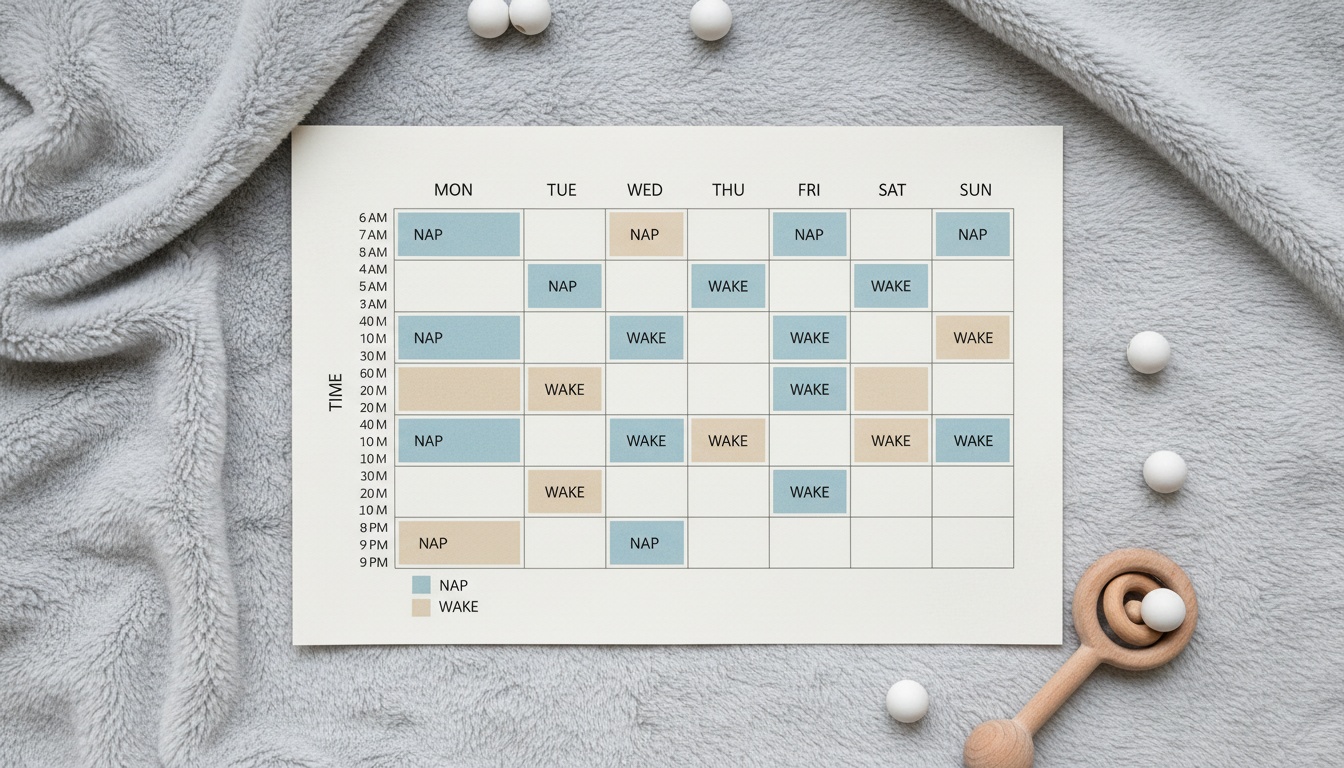
4-Nap Sample Schedule (Younger/Smaller 4 Month Olds, ~1.5 hr windows)
| Time | Activity |
|---|---|
| 7:00 AM | Wake for the day |
| 8:30 AM | Nap 1 (1.5 hr window) |
| 9:30–10:00 AM | Wake from Nap 1 |
| 11:00–11:30 AM | Nap 2 (1.5 hr window) |
| 12:00–12:30 PM | Wake from Nap 2 |
| 1:45–2:00 PM | Nap 3 (1.5 hr window) |
| 2:45–3:15 PM | Wake from Nap 3 |
| 4:30–4:45 PM | Nap 4 / catnap (cap at 20–30 min) |
| 6:30–7:00 PM | Bedtime |
Target daytime sleep: 3.5 to 4.5 hours. Individual naps should be capped at 2 hours to protect nighttime sleep.
3-Nap Sample Schedule (Older/Longer-Window 4 Month Olds, ~2–2.5 hr windows)
| Time | Activity |
|---|---|
| 7:00 AM | Wake for the day |
| 9:00 AM | Nap 1 (2 hr window) |
| 10:00–10:30 AM | Wake from Nap 1 |
| 12:00–12:30 PM | Nap 2 (2 hr window) |
| 1:30–2:00 PM | Wake from Nap 2 |
| 3:30–4:00 PM | Nap 3 / catnap |
| 6:30–7:30 PM | Bedtime |
This is the transition zone. Some days will be 4 naps, some will be 3. Both are fine.
The harder question isn't which schedule to follow — it's knowing when to abandon it. That's what the troubleshooting section is for.
What About the "Danger Nap"?
The danger nap is the late-afternoon catnap, typically after 5:00 PM, that's long enough to reduce sleep pressure but too close to bedtime. Left uncapped, it pushes bedtime past 8:00 PM or fragments the first stretch of night sleep.
Not dangerous in any medical sense. Just genuinely disruptive to the daily routine.
Handle it by capping the catnap at 20 to 30 minutes and waking baby by 5:00 to 5:30 PM at the latest. A short catnap takes the edge off without tanking bedtime.
---
5. Activities and Engagement During Wake Windows
What baby does during awake time directly affects how tired they are and how well the next nap goes. Under-stimulation leaves them not quite ready for sleep. Over-stimulation makes settling harder. Neither is what you want.
| Wake Window | Activity Type | Notes |
|---|---|---|
| First (morning) | Gentle: feeding, face-to-face, high-contrast cards, brief tummy time | 2–3 min tummy time max |
| Middle (peak alert) | Active: longer tummy time, baby gym, narration, outdoor time | Build to 10–15 min/day total |
| Last (pre-bed) | Wind-down: dim lights, bath, feeding, quiet singing | Avoid screens and new stimulation |
First Wake Window (Lowest Energy Period)
Keep it gentle. Feeding, diaper change, face-to-face interaction at close range. Black-and-white or high-contrast cards work well here — hold them 8 to 12 inches from baby's face. At 4 months, visual acuity is still developing, and high-contrast patterns are the clearest thing they can actually see. Brief tummy time, 2 to 3 minutes, is enough this early in the day. This window isn't the time for high-energy play.
Middle Wake Windows (Peak Alertness)
This is when baby is most alert and most capable of learning. Longer tummy time sessions work here — build toward 10 to 15 minutes total per day, per AAP developmental guidelines. A baby gym or play mat with batting toys supports the intentional reaching that 4 month olds are just starting to develop. Toys at chest height encourage this without overwhelming them.
Narrate what you're doing. "I'm washing your hands now. The water's warm." It sounds silly, but language exposure during alert periods supports cognitive development, per the AAP's language development guidelines for infants. Gentle singing and mirror play also work well in this window.
Fresh air during a middle wake window supports circadian rhythm development. Light exposure helps regulate the 24-hour rhythm that's just coming online at this age. Many parents report better nap duration after outdoor time — not a guarantee, but a low-effort variable worth testing.
Last Wake Window Before Bedtime (Wind-Down)
Dim the lights 20 to 30 minutes before target sleep time. Bath, if it's part of your routine. Feeding. Quiet singing or white noise introduction. Avoid screens, loud play, and anything new or exciting. This is the highest-risk window for overtiredness, and it's the one that most directly affects nighttime sleep quality.
---
6. Troubleshooting Wake Window Problems
Most common 4 month sleep problems trace back to wake window miscalibration. Not always — but often enough that it's the first thing I check.
Baby Won't Nap / Fights Sleep
Two most likely causes: undertired (window too short) or overtired (window too long, missed the sleep window entirely). Check when you started the settling attempt relative to when the last nap ended. If baby was awake less than 75 minutes, try extending by 15 minutes. If they were awake more than 2.5 hours and showing escalating fussiness, you've likely missed the window — shorten next time.
Why Are Night Wakings Getting Worse Even When Naps Seem Okay?
The 4-month sleep regression: what it is and how long it lasts is not primarily a wake window problem, and adjusting wake windows alone won't fix it. Sleep cycles are now shorter and baby wakes briefly between them. This is neurological, not a scheduling error.
That said, if nap duration is consistently under 30 minutes each, sleep pressure accumulates unevenly and fragmented nighttime sleep follows. Prioritize at least one consolidated nap per day. The second nap is usually the best candidate.
Is the 4 Month Sleep Regression the Worst?
Many parents and sleep researchers consider it the most disruptive regression — and the reason is permanent. Sleep architecture changes at 4 months don't revert the way other regressions do. The 8-month regression passes. The 4-month change is how your baby sleeps now.
What actually helps: consistent wake windows, a predictable daily routine, and realistic expectations about nap duration at this age. Typical disruption lasts several weeks, though it can persist longer without consistent routines. Individual experiences vary widely.
Wake Windows Aren't Working — Now What?
First, rule out the obvious. Growth spurts, illness, teething onset, and developmental leaps can make even well-calibrated wake windows feel useless for a week or two. Some parents report that developmental leap periods overlap with the 4 month regression, and the combination can be particularly rough.
If baby is 4 months or older, healthy, and gaining weight appropriately, and they can't connect sleep cycles without assistance, that's an independent sleep skills gap — not a wake window problem. Sleep training methods for 4-month-olds address the skill; wake windows address the timing. You need both.
One scenario worth naming: a parent I worked with had a baby who was consistently taking 20-minute naps. After tracking for 3 days, we found she was putting him down at 75 minutes when his actual window was closer to 95. Two days after extending, nap duration stretched to 45–50 minutes. The window was the whole problem.
Call the pediatrician if total sleep is consistently outside the normal range for extended periods. That warrants a conversation.
---
7. When and How to Adjust Wake Windows
Two main triggers for adjusting: baby is consistently showing undertired signs, or the nap count is naturally dropping from four to three.
Transitioning from 4 Naps to 3 Naps
Signs it's time: baby consistently fights the 4th nap, bedtime is being pushed past 8:00 PM, or naps one through three are long and consolidated. Extend wake windows by 15 to 20 minutes incrementally over one to two weeks. Don't jump all at once.
One thing most sleep guides skip: many 4 month olds are not yet ready for 3 naps. This transition typically happens somewhere around transitioning to 3 naps at 5–6 months, though timing varies by baby. If a 4 month old seems to be skipping the 4th nap, verify they're not just overtired and crashing before it. The signs look similar. Check nap duration across the whole day before dropping.
When to Extend a Wake Window
Baby is settling quickly but waking after one sleep cycle (30 to 45 minutes), seeming rested. Bedtime is creeping earlier than 6:00 PM consistently. These are signals that slightly more sleep pressure before nap time would help.
When to Shorten a Wake Window
Baby takes 20 or more minutes to fall asleep and naps are short. Fussiness and clinginess spike in the hour before nap. Shorten by 10 to 15 minutes and hold there for two days.
Wake windows are a tool, not a rule. The flexibility is the point — a baby's sleep needs in the first year shift faster than any fixed schedule can track. Build the habit of watching, adjusting, and watching again. That skill will serve you well past 4 months.
---
Once you've identified your baby's wake window, tracking it consistently is half the battle. A baby tracking app that automatically timestamps wake and sleep events can help — useful at 3 AM when you're not sure if you wrote that down. Look for apps that offer sound detection and event history logging; some are available on iPhone without additional hardware. Other baby monitoring products like Nanit and Cubo offer video and additional features, though they typically require additional hardware upfront (check current pricing).
---
8. Key Takeaways
- 1.5–2.5 hours — wake window range; shortest in the morning, longest before bed
- 14–15 hours — total sleep target across 24 hours, per commonly cited pediatric sleep guidelines (exact figures vary by source)
- 3–4 naps per day — most 4 month olds; cap individual naps at 2 hours
- 4-month regression is permanent — sleep architecture changes don't revert; wake windows help you manage it
- Overtired vs. undertired — overtired: settles slowly, short naps; undertired: 20+ min to fall asleep, wakes early looking rested
- Sweet spot signal — settles within 5–10 minutes, naps 45+ minutes
- 3-nap transition — many 4 month olds aren't ready yet; confirm it's not overtiredness before dropping a nap
- Adjustment protocol — 10–15 minutes at a time; re-test for two days before adjusting again