
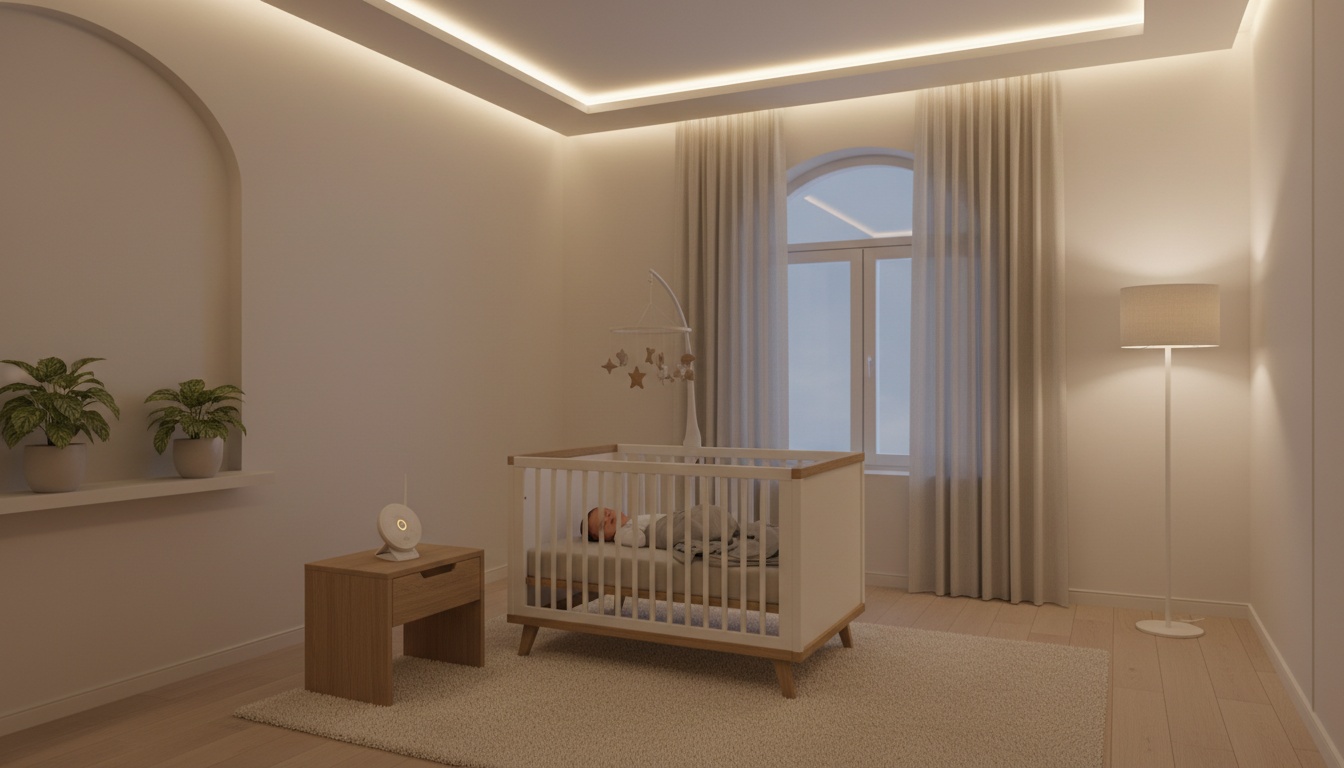
1. Why Choose an Audio-Only Baby Monitor?
Here's the honest case for going low-tech: audio-only monitors are private by design, cheap to run, and simpler to use than any app-based alternative. No app to update at 2 a.m. when you're already exhausted. No wireless password to re-enter when your router reboots. No remote storage service keeping recordings of your kid's room that you can't delete.
DECT (Digital Enhanced Cordless Telecommunications) is the technology most audio monitors use — it runs on a dedicated 1.9 GHz frequency that's completely separate from your home wireless network, Bluetooth, and neighboring networks. That means no app crashes when your router reboots, no interference from your neighbor's baby monitor, and no shared bandwidth with whatever else is running in your house.
The signal is encrypted between the nursery unit and the parent unit — and only those two devices.
That's the baby monitor security angle that rarely gets enough attention.
Are Audio-Only Baby Monitors Still Good?
Yes — and I'd argue more so than ever. Modern DECT audio monitors deliver crystal-clear sound, advertised ranges that typically fall in the 1,000–1,500 feet range (though this varies by model), and zero wireless attack surface. For parents past the newborn stage who want reliable, private monitoring without the complexity of smart monitors, they remain the top choice.
If the privacy angle matters to you, our baby monitor security and privacy guide breaks down how DECT compares to wireless monitors in documented breach scenarios.
Many parents report a behavioral difference. In conversations with parents and in online communities like r/beyondthebump, the pattern is consistent: video monitor users report checking more than they intend to — sometimes every few minutes during naps. A sound monitor encourages listening instead of watching, which many parents find helps them stay present in whatever they were doing between checks. For parents managing sleep deprivation, that shift in attention can feel meaningful.
Where audio-only outperforms video:
- Nighttime monitoring (nothing to see in the dark anyway)
- Nap monitoring when you're in the backyard or garage
- Multi-room setups where you want a second unit without buying a second camera
- Travel, where packing a dedicated parent unit beats fiddling with hotel wireless networks
The buyer here isn't someone who couldn't afford a video monitor. It's someone who tried one and found the screen more anxiety-inducing than reassuring.
The stronger question isn't whether audio-only is good — it's whether it's right for your specific situation.
---
2. Audio vs. Video Monitor: Which One Actually Reduces Parent Anxiety?
This isn't a budget question — it's a parenting-style question. Audio monitors suit parents of babies 6+ months old who've established sleep patterns and want monitoring without screen distraction. Video monitors are better for newborns where visual positioning checks matter, or for parents whose anxiety is reduced by visual reassurance.
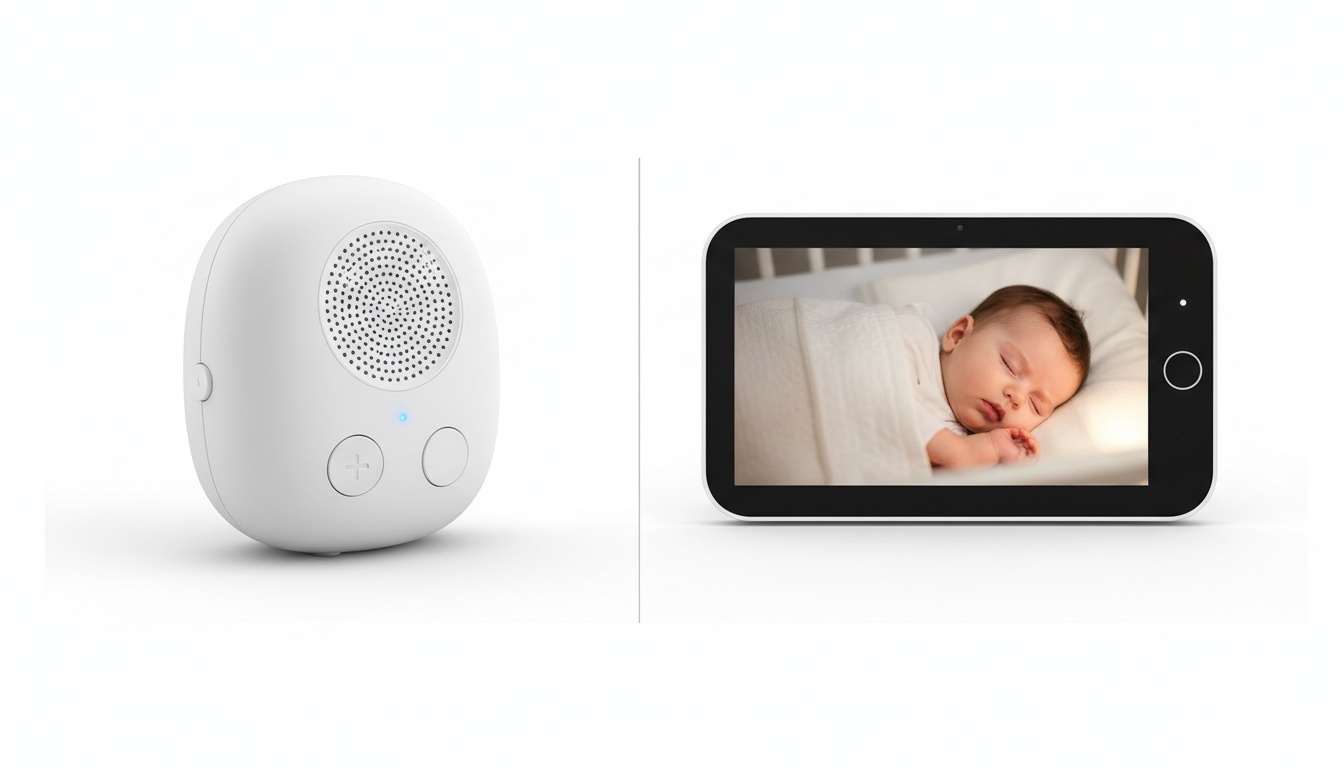
| Feature | Audio Monitor | Video Monitor |
|---|---|---|
| Privacy / Security | High — no wireless network dependency, no remote storage | Variable — depends on brand/model |
| Cost | Typically $20–$80 hardware only (check current pricing) | Typically $80–$300+ hardware; subscription costs for smart monitors vary by service |
| Ease of Use | Plug and play | App setup, wireless pairing, firmware updates |
| Range | Varies by model; commonly 1,000–1,500 ft advertised | Network-dependent (theoretically unlimited) |
For a deeper look at the video side, see our best video baby monitors guide.
Choose audio if: your baby is 6+ months old, you've already established sleep patterns, you travel frequently, or you want monitoring without another screen in your life.
Choose video if: you have a newborn and want to check positioning, you're monitoring a child with specific health concerns, or the visual reassurance helps you sleep better.
Video monitors and audio monitors serve different parenting needs. The AAP's safe sleep guidelines focus on environment setup before sleep, not continuous surveillance during it. Many parents find audio monitoring sufficient for their needs past the newborn stage — see the AAP safe sleep guidelines for the full framework. After the first few months, audio is often enough — and the parents who figure that out early tend to be less anxious, not more.
---
3. The 5 Audio Monitors That Actually Deliver on Their Range Claims
The picks below draw on independent testing data plus real-world feedback from parents who've used these monitors across different home types.
Before committing to hardware, it's worth knowing a software option exists: BabyRadar uses on-device audio analysis to detect baby sound events on a spare iPhone, without buying dedicated hardware. If you want more than sound, it can also attach a crib photo to each cry alert and stream live video on demand; the camera is opt-in and stays off between uses. See how BabyRadar works if you'd rather use a device you already own.
| Model | Price (check current retailer) | Advertised Range | Battery Life | Best For |
|---|---|---|---|---|
| VTech DM1211 | Check current pricing | Check manufacturer specs | Check manufacturer specs | Most buyers |
| VTech DM221 | Check current pricing | Check manufacturer specs | Excellent | Budget-conscious |
| VTech DM111 | Check current pricing | Check manufacturer specs | So-so | Grandparents/backup |
| Motorola Audio | Check current pricing | Check manufacturer specs | Good | Ergonomics focus |
| TimeFlys QQ Portable | Check current pricing | Check manufacturer specs | Rechargeable USB | [Portable baby monitors](/best-portable-baby-monitors) |
Prices fluctuate; check current Amazon pricing before buying.
VTech DM1211
The DM1211 is a strong recommendation in this category. It ships with two parent units — a detail that sounds minor until you realize most competitors charge extra for that. One for the bedroom, one for wherever you spend your evenings.
Independent testing has recorded strong real-world range performance through multiple walls — notably better than entry-level alternatives. That's not the open-field spec. No monitor hits that indoors. But solid through-wall performance is meaningful for a two-story house. In larger homes, signal typically holds through challenging rooms like garages — the hardest to reach.
Two-way talk is included, the nightlight on the baby unit is a practical bonus, and the system supports additional parent units if your household needs them.
Best for: The DM1211 is best for parents with larger homes (2,000+ sq ft) who want strong real-world range and two parent units without buying a bundle. It ships with two parent units and supports additional units if your household needs them.
Pros: Comes with two parent units, strong real-world range, clear audio, two-way talk Cons: Bulkier parent unit than the DM221, costs more than entry-level options
VTech DM221
The DM221 offers strong value for its price. Independent testing has measured high maximum volume output with low distortion — performing well against competing monitors in the same price range, though specific test data varies by source.
The private DECT 6.0 connection keeps it off your home network entirely. VOX mode filters background noise and only activates the parent unit when it detects sound above a set threshold — saving battery during quiet stretches. It works. The parent unit has a belt clip, making it portable around the house. The DM221 uses a rechargeable battery, so you won't be hunting for AA batteries at midnight. Pairing is straightforward out of the box. The belt clip is more useful than it sounds — easy to wear for a full afternoon without thinking about it.
Worth noting: in some sound testing, the DM221 showed slightly more static than the DM111 — a minor trade-off for the significantly better battery life and feature set.
Best for: The DM221 is best for budget-conscious parents who won't sacrifice sound quality. It delivers strong clean output, VOX mode, two-way talk, cry detection, and excellent battery life — the strongest feature-to-price ratio in the audio-only category.
Pros: Outstanding sound clarity, VOX mode, belt clip, fast setup, DECT 6.0 private connection Cons: One parent unit only, slightly more static than DM111 in some tests
VTech DM111
There's no menu, no cry detection, no two-way talk — just a volume knob and a long advertised range on a DECT connection. Battery life tested as so-so compared to the DM221 in hands-on testing, and setup is quick. The belt clip is included. For grandparents, caregivers, or a secondary nursery monitor in a guest room, this is the right call.
Best for: The DM111 is best for grandparent households, caregivers, or backup nursery monitors in guest rooms where simplicity is non-negotiable. No menu, no cry detection, no two-way talk — just a volume knob, DECT connection, and a belt clip.
Pros: Extremely simple, no learning curve, budget-friendly, DECT connection Cons: No two-way talk, no cry detection, weaker battery than DM221
Motorola Audio Monitor
If the VTech DM221 is the value pick, the Motorola audio monitor is the one you buy when you've held both parent units in your hand and noticed the difference. The controls are better laid out for one-handed operation in the dark — which matters more than it sounds at 3 a.m. Two-way talk is included across Motorola's audio range, and advertised range is comparable to the DM221. Independent real-world range and sound quality data for the current Motorola lineup is limited; confirm specs and current pricing before purchasing.
Best for: The Motorola audio monitor is best for parents who prioritize parent unit ergonomics. The controls are better laid out than VTech equivalents for one-handed use in the dark, two-way talk is included, and advertised range is comparable to the DM221.
Pros: Well-designed parent unit, two-way talk, solid sound Cons: Typically priced slightly higher than equivalent VTech models; less independent test data available
Budget Pick: TimeFlys QQ Portable
The TimeFlys QQ Portable is the travel-specific pick. Real-world range through walls is shorter than primary home monitors — open-field range is on the shorter end for its category.
The rechargeable battery via USB is a genuine travel convenience. You're not hunting for AA batteries in a hotel room at midnight. This isn't a primary home monitor; as a portable baby monitor for vacation rentals, hotel stays, or grandparent visits, it works. Know the range limitation going in.
Best for: The TimeFlys QQ Portable is best for travel, vacation rentals, and hotel stays where a rechargeable USB battery beats hunting for AA batteries at midnight. Real-world range through walls is limited — not suitable as a primary home monitor, but reliable for temporary use.
---
4. Key Features That Actually Matter Before You Buy
Sound Quality and Clarity
DECT 6.0 monitors are digitally encrypted and interference-free — that's the baseline for any purchase today. Older analog monitors (49 MHz or 900 MHz) pick up interference from cordless phones, microwaves, and neighboring baby monitors. There's no reason to buy analog.
Noise-activated (VOX) mode means the parent unit stays quiet until the baby unit detects sound above a threshold. Sensitivity settings matter a lot here — too sensitive and you're hearing every rustle; too low and you miss real cries.
Sound quality is table stakes for any DECT monitor today. Range is where the real differences show up.
Range and Real-World Connectivity
Advertised range is always open-field. Walls cut it significantly — sometimes brutally, if you're in an older home with plaster or brick. Through-wall testing is a better proxy for a two-story home than open-field specs. We cover range testing methodology in detail in our baby monitor range and testing guide.
Realistic expectations by home type:
- Under 1,500 sq ft (apartment, small house): any DECT monitor works
- 2,000–3,500 sq ft two-story: DM1211 or Motorola
- Over 3,500 sq ft or unusual construction (brick, plaster): test placement carefully before committing
Real-world range through walls is the number that matters for home use — not the open-field spec on the box.
How Long Does a Parent Unit Actually Last Overnight?
The DM221 tested as excellent for battery life; the DM111 tested as mediocre in hands-on testing. For travel, rechargeable-via-USB monitors beat AA batteries. For home use, rechargeable units in charging cradles are most convenient. Target at least 10 hours of continuous use for overnight monitoring without plugging in.
Parent unit battery life is the spec that gets overlooked most often. It's also the one that bites you at 3 a.m.
Two-Way Talk and Cry Detection
Cry detection sounds more useful than it is in practice — here's when it actually matters: toddlers who are half-awake and escalating. A familiar voice through the parent unit can often settle them before they fully wake up. False positive rates vary; most DECT monitors let you adjust sensitivity. It's a useful feature but not a substitute for listening.
Ease of Use and Setup
Both the VTech DM221 and DM111 pair quickly in testing. No app, no wireless password, no QR code scan — just power on both units and they find each other. For sleep-deprived parents, that simplicity is worth more than any feature list.
Do Audio Monitors Work with Alexa or Google Home?
Most dedicated DECT audio monitors — including VTech and Motorola models — do not integrate with Alexa or Google Home. They're designed as closed two-device systems, which makes them private and interference-free. If smart home integration matters to you, you'll need a network-connected monitor, which comes with security trade-offs.
---
5. Audio-Only Monitor Buying Guide by Budget
Under $30: Entry-Level Audio Monitors
The VTech DM111 is the only strong option in this tier. You get a DECT private connection, long advertised range, and a belt clip — but no two-way talk, cry detection, or great battery life.
This tier is right for a secondary nursery monitor in a guest room, grandparent households where simplicity is non-negotiable, or a travel backup when you don't want to risk your primary monitor. Don't expect it to replace a mid-range monitor for daily home use.
$30–$60: Mid-Range Sweet Spot
This is where most buyers should land. The VTech DM221 typically sits in the mid-range tier (check current retailer pricing). For that price: strong clean output, VOX mode, two-way talk, cry detection, excellent battery life, and DECT 6.0 privacy. It's the best feature-to-price ratio in the audio-only category.
The Motorola audio monitor overlaps this tier depending on the specific model and retailer. For a broader look at value options, see our best budget baby monitors roundup.
$60+: Premium Audio Monitors
The VTech DM1211 justifies its price with two parent units in the box and strong real-world range through walls in independent testing. For larger homes or households where both partners want a dedicated parent unit, that's a meaningful advantage.
For premium picks across all monitor types, see our best premium baby monitors guide.
---
6. Common Questions, Troubleshooting, and Longevity
Why Is My Audio Monitor Cutting Out?
Three causes cover 90% of cases: range limit, interference, and battery. If you're at the edge of your monitor's real-world range (not the advertised spec), signal will drop intermittently — move the parent unit closer and test.
Interference from cordless phones on the 2.4 GHz band can affect some DECT monitors in older homes with legacy cordless handsets. Switching the monitor's channel (if the model supports it) usually resolves it.
Low battery on either unit causes signal degradation before it causes a complete dropout. Recharge or replace batteries first — it's the fix that gets overlooked most often.
How Long Do Audio Baby Monitors Last?
The simpler the electronics, the longer the lifespan — which is a quiet argument for audio over smart monitors. The baby unit takes more wear (it lives in the nursery, gets knocked around during room transitions), and the parent unit's battery capacity degrades over time like any rechargeable device.
Most DECT monitors carry 1–2 year manufacturer warranties; check current retailer return policies before purchasing, as these vary by platform.
Can Audio Monitors Be Hacked?
DECT monitors have no wireless attack surface. There's no IP address to find, no app to exploit, no remote account to breach. That's it. The signal is encrypted between the two units on a dedicated frequency.
Network-connected video monitors are a different story. Security researchers have documented vulnerabilities in several popular wireless baby monitor brands — see our baby monitor security and privacy guide for a full breakdown. The case for DECT audio isn't theoretical — it's the structural absence of the attack vector entirely.
Tips for Getting the Best Range in Your Home
Place the nursery unit at least three feet from other electronics and away from exterior walls. Carry the parent unit rather than leaving it stationary on a far surface — signal degrades when the unit is obstructed.
Test your range during initial setup by walking the parent unit to every corner of your home and noting where signal degrades. Do this before the baby is in the room.
Nursery unit placement matters more than most guides acknowledge. Placing the unit higher in the room — on a dresser rather than floor level — improves signal propagation through ceilings in multi-story homes. Building materials affect DECT range significantly: concrete and brick cut range more aggressively than drywall, and older homes with plaster walls will see reduced real-world performance compared to modern frame construction. Plan for it.
---
7. Key Takeaways
- Best overall: VTech DM1211 — two parent units, strong real-world range through walls, two-way talk
- Best value: VTech DM221 — strong clean output, VOX mode, excellent battery life (check current pricing)
- Best for simplicity: VTech DM111 — no menu, no learning curve, DECT private connection
- Best for travel: TimeFlys QQ Portable — USB rechargeable, compact, limited through-wall range
- DECT audio monitors have zero wireless attack surface — the baby monitor security and privacy guide advantage is structural, not marketing
- Advertised range is open-field; real-world range through walls is the number that matters for home use
- Audio-only isn't a budget compromise — for parents past the newborn stage, it's often a different choice that works well for many families
Still deciding? Compare all audio monitor options side-by-side or explore BabyRadar if a software solution fits your setup better.