

1. How Much Sleep Does a 6-Month-Old Need?
A 6-month-old needs 14 to 15 hours of total sleep per day (per AAP guidelines). This often breaks down into roughly 10 to 12 hours of overnight sleep and 2 to 3 hours of daytime sleep, though the exact split and number of naps — typically two or three — can vary from baby to baby.
At this age, their circadian rhythm is maturing rapidly. Sleep architecture shifts to include deeper, more restorative cycles, which is why they can handle longer stretches awake.
Night Waking Norms
Night waking norms vary based on individual temperament and feeding methods. A six-hour stretch is often cited as a meaningful milestone for sleep consolidation, though definitions vary across pediatric sleep research.
Every baby hits these milestones on their own timeline. Stop stressing over minor daily variations.
2. Wake Windows, Sleep Cues, and the 2-to-3 Nap Transition
In my experience tracking wake windows for three months, the 15-minute buffer matters more than the exact clock time. At this age, babies generally do well with about 2 to 2.5 hours of awake time between sleep periods, though the ideal window varies from baby to baby.
Watch for tired signs. Classic signals include eye rubbing and sudden fussiness.
Moving to a two-nap schedule happens frequently around this age. Signs include fighting the third nap or experiencing sudden early morning waking.
How do you actually execute the 3-to-2 nap transition?
- Day 1: Cap the third nap at exactly 15 minutes.
- Day 2–3: Push the first two wake windows by 15 minutes each.
- Day 4: Drop the third nap entirely.
- Ongoing: Pull bedtime earlier by 30 minutes to compensate for lost daytime rest.
3. Sample Sleep Schedules for 6-Month-Olds
Template 1: The Early Bird (6:00 AM Wake)
This works great for natural early risers.
- 6:00 AM — Wake and feed
- 8:00 AM — Nap 1 (90 minutes)
- 9:30 AM — Wake and feed
- 12:00 PM — Nap 2 (90 minutes)
- 1:30 PM — Wake and feed
- 4:00 PM — Optional 15-minute catnap
- 6:30 PM — 6 month old bedtime routine begins
- 7:00 PM — Asleep
Template 2: The Daycare-Friendly Schedule (7:00 AM Wake)
A daycare schedule requires heavy coordination with your provider.
- 7:00 AM — Wake and feed
- 9:15 AM — Nap 1 (45–60 minutes)
- 12:30 PM — Nap 2 (60–90 minutes)
- 3:30 PM — Optional catnap
- 7:00 PM — Bedtime routine begins
- 7:30 PM — Asleep
Template 3: The Later Riser (8:00 AM Wake)
Families working evening shifts love this setup.
- 8:00 AM — Wake and feed
- 10:15 AM — Nap 1 (90 minutes)
- 2:15 PM — Nap 2 (90 minutes)
- 8:00 PM — Bedtime routine begins
- 8:30 PM — Asleep
Template 4: The 3-Nap Holdover
Some babies still strongly demand three daily rests. Keep wake windows slightly shorter.
- 6:30 AM — Wake and feed
- 8:30 AM — Nap 1 (60 minutes)
- 11:30 AM — Nap 2 (60 minutes)
- 3:00 PM — Nap 3 (30 minutes)
- 7:00 PM — Bedtime routine begins
- 7:30 PM — Asleep
Breastfed vs. Formula-Fed Schedules
Breastmilk: Gastric emptying takes about 90 minutes, which means more frequent night waking is a completely normal biological reality.
Formula: Digestion takes three or four hours, often leading to longer stretches between feeds.
It's not a schedule failure. If you use Template 1 for a breastfed baby, simply expect to add a 3:00 AM feed. Check out our 5-month sleep schedule and feeding transition guide for more tips.
Montessori and Gentle Parenting Variants
Montessori-aligned families often use floor beds and child-led wake times. This approach shifts the standard template logic entirely.
Instead of enforcing strict clock times, you offer sleep at the first yawn rather than clock-watching. A floor bed allows self-initiated sleep without cry-it-out. The catch is, you have to trust them to safely explore their room when rested.
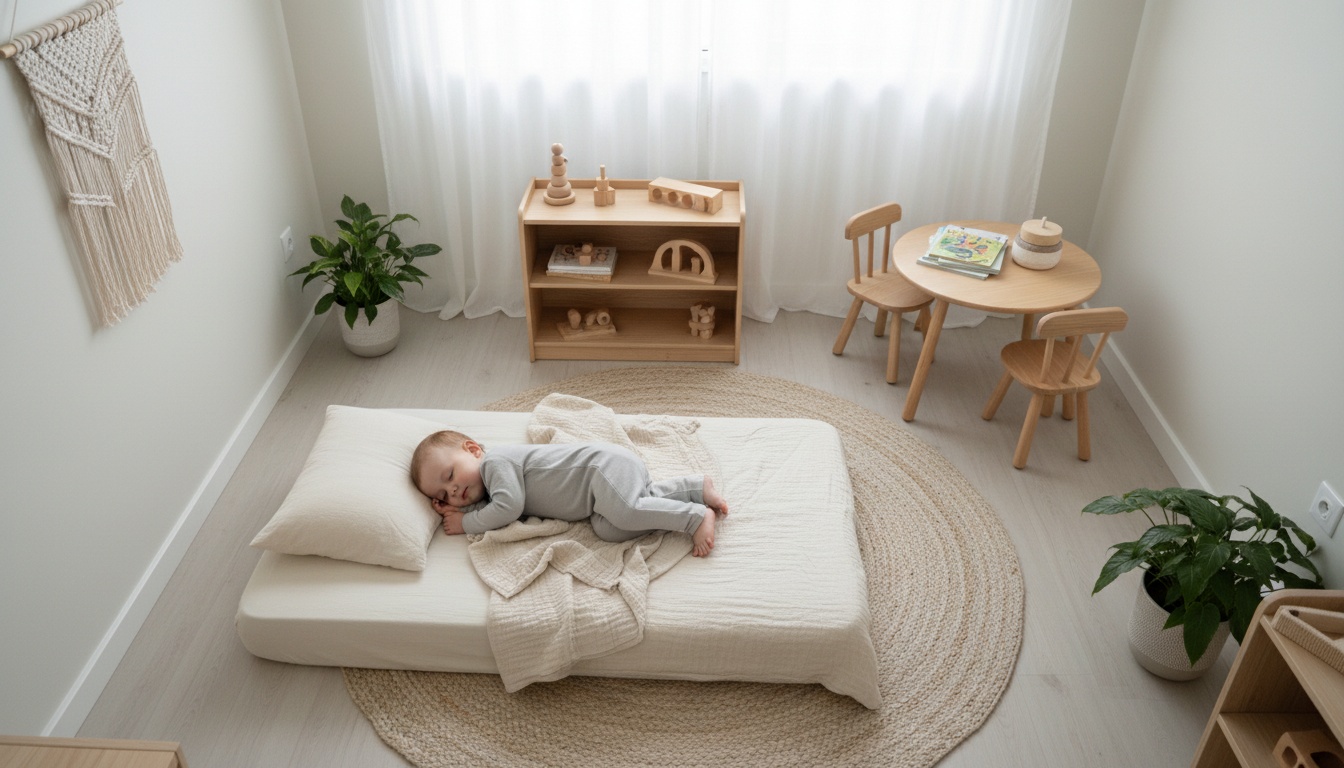
4. The 6-Month Sleep Disruption: What's Actually Happening (and How Long It Lasts)
What many parents call the "6-month sleep regression" is actually a massive developmental progression. Motor skill acquisition wrecks sleep. Once babies figure out how to roll, they practice it obsessively, including at 2 AM in a pitch-black crib.
The rolling disruption hit us hardest around week two. Our daughter would flip to her stomach and scream because she could not roll back yet.
The good news is this phase burns itself out. Most families see improvement within two to six weeks. That said, these disruptions also align with the developmental leaps described in Wonder Weeks Leap 5 — a popular framework among parents, though one not universally accepted by the broader scientific community. Consistency acts as your primary anchor during this phase.
5. Troubleshooting Common 6-Month Sleep Problems
Short Naps (Under 30 Minutes)
Short naps usually stem from babies being undertired. The catch is, overtiredness causes the exact same symptom. I spent two weeks adjusting wake windows in the wrong direction before I figured that out.
Tweak the wake window by fifteen minutes. Darken the room completely.
Tracking when short naps happen — and how often — is where a wellness monitor like BabyRadar can offer insights; the event log helps you observe patterns you might otherwise miss.
Contact Napping and Transitioning to Independent Sleep
Contact napping happens frequently. Transitioning away requires a gradual drowsy-but-awake approach rather than just dropping them in the crib cold turkey.
Start by holding your baby until they're fully asleep. After three days, put them down when they're drowsy but still awake in your arms. Next, place them in the crib drowsy.
Gentle sleep training methods — like the chair method or pick-up-put-down — tend to work well here because they don't require abrupt cold-turkey changes. Read our gentle sleep training methods guide for detailed steps.
Early Morning Waking and Timezone Shifts
Counterintuitively, early waking often means bedtime was too early. Too much daylight exposure also triggers dawn wake-ups.
Daylight Saving Time can temporarily disrupt a 6-month-old's circadian rhythm, though most babies adjust within a few days. Shift their schedule by 15 minutes a day leading up to the time change. It makes a huge difference.
Teething Disruptions
Teething can begin as early as four months and often intensifies around six months. Teething sleep disruptions usually peak at night when there are no daytime distractions.
Offer a chilled teething toy before the bedtime routine.
Managing Sleep with Older Siblings or Returning to Work
Stagger nap times if you have a noisy toddler at home. A screaming three-year-old ruins delicate nap transitions instantly.
Place a loud sound machine outside the baby's door, not just inside the room, to block hallway noise. Returning to work requires clear communication.
Write down your exact wake windows and feeding times for the daycare provider. Handing them a physical card ensures that every single caregiver follows the exact same plan.
6. Tools That Actually Help at 6 Months
Three months of BabyRadar event logs taught me more about our daughter's sleep patterns than six months of guessing had. We have been running BabyRadar on an old iPhone 12 mounted in the corner of the nursery for about three months now.
It's an iPhone-based wellness monitor with two tiers:
- Free Tier: Cry alerts sent to your phone the moment she stirs, plus a history of past sleep events so you're not staring at a screen all night.
- Pro Tier (pricing may vary; check the App Store for current rates): Adds live video streaming, photo snapshots, and live listen for complete peace of mind. Event photos are stored in the cloud and auto-deleted at 90 days.
Competitors like Nanit and Cubo are well-regarded products, but they typically require dedicated hardware purchases plus ongoing cloud subscription fees for similar functionality (check each brand's current pricing, as rates vary).
7. Safe Sleep and a Sleep-Friendly Environment at 6 Months
Keep the baby on a firm flat surface with absolutely no loose bedding. Always place them on their back to start every sleep. Once your baby can roll both ways independently, you don't need to reposition them if they roll during sleep — but the starting position should always be back.
Optimal room temperature sits between 68 and 72 degrees Fahrenheit. Pitch black darkness helps immensely.
Transition to an arms-free sleep sack immediately if your baby is rolling. We prefer the Halo or Kyte Baby transitional sacks.
Ditch the swaddle entirely today.
After spending six months testing this, a boring sleep environment usually works best.
8. Key Takeaways
- Target 14 to 15 hours of total sleep daily.
- Keep wake windows between 2 and 2.5 hours.
- Transitioning to two naps requires consistent behavioral cues.
- Choose a schedule template that fits your family's actual waking hours.
- Remove swaddles immediately once the baby begins rolling.
The 4 AM wake-ups that sent me back to square one eventually resolved. Not because we found a perfect schedule. They stopped because we stopped treating the schedule as fixed and started treating it as a starting point.
*
A quieter night, starting with the iPhone in your drawer. BabyRadar turns a spare iPhone into a baby monitor with a free tier — check the App Store for current availability, features, and pricing. No dedicated hardware required. Download on the App Store