

1. How Much Sleep Does a 4-Month-Old Need?
A 4-month-old needs 14 to 17 hours of total sleep daily (AAP). Expect 10 to 12 hours overnight and 3 to 5 hours of daytime sleep.
To hit these targets, watch wake windows closely. Most babies handle 75 to 120 minutes of awake time.
4-Month-Old Sleep Chart (Weeks 14–18)
| Metric | Range |
|---|---|
| Wake Windows | 75–120 minutes |
| Number of Naps | 3 to 4 |
| Total Daytime Sleep | 3–5 hours |
| Total Nighttime Sleep | 10–12 hours |
2. Transitioning from a 3-Month to a 4-Month Schedule
A newborn sleep schedule looks completely different from what works at sixteen weeks. Your baby's brain begins developing adult-like sleep stages. The daily rhythm that worked perfectly last month will suddenly fail.
To adjust, gradually extend their wake windows. Push that morning 60-minute window to 75 minutes over a few days. If they fight naps constantly, they likely need slightly more awake time to build sufficient sleep pressure before resting, so try extending that window by ten minutes.
Recognizing Baby Sleep Cues
Don't wait for loud fussing. By the time a baby is crying hard, they're already overtired and harder to settle.
Eye rubbing and immediate gaze aversion act as behavioral signals. Overtired baby signs include arching backs and clenched fists.
3. What Causes the 4-Month Sleep Regression?
This neurological shift alters how your baby rests entirely. As a result, they now cycle through light sleep at a much faster rate. Partial arousals often cause full wake-ups.
Look for these specific behavioral signs:
- Sudden night waking after previously sleeping well
- Capping naps at exactly 30 or 45 minutes
- Increased fussiness at the end of wake windows
- Fighting sleep despite clear tired cues
- Practicing new motor skills like rolling in the crib
This frustrating transition typically lasts two to six weeks. Finding effective sleep regression solutions often comes down to how you manage their daily awake windows.
4. Sample 4-Month Sleep Schedules: 3 Real-Day Examples
Which Schedule Type Fits Your Family?
Every family operates differently. I've talked to more than forty families who swear by a strict 7:00 PM bedtime, while others need flexibility. Here are three approaches.
Schedule 1: Independent Sleeper (Crib-Based, Structured Naps)
For a crib-based independent sleeper, I structure the day like this:
- 7:00 AM: Wake up and feed
- 8:45 AM: Nap 1 (60–90 min)
- 10:15 AM: Wake and feed
- 12:15 PM: Nap 2 (60–90 min)
- 1:45 PM: Wake and feed
- 3:45 PM: Nap 3 (30–45 min)
- 4:30 PM: Wake and feed
- 6:30 PM: Bedtime routine
- 7:00 PM: Asleep in crib
This yields roughly 13.5 to 15 hours of total sleep depending on nap lengths. It works perfectly for upcoming daycare transitions where schedules are strictly enforced.
Schedule 2: Contact Napper / Attachment Parenting Approach
The contact napping schedule saved my sanity during weeks sixteen through twenty.
- 7:30 AM: Wake up and nurse
- 9:00 AM: Nap 1 in baby carrier (45 min)
- 11:30 AM: Nap 2 (contact nap or crib attempt, 90 min — this is a good slot to practice independent sleep)
- 3:00 PM: Nap 3 in stroller (45 min)
- 5:30 PM: Nap 4 (quick 30 min catnap)
- 7:30 PM: Bedtime routine
- 8:00 PM: Asleep
If neither of those fits, a wake-window-based approach removes the clock entirely.
Schedule 3: Flexible / Combination Approach
You base three or four daily naps entirely on observed wake windows rather than the clock.
- Wake: Whenever baby wakes (e.g., 6:30 AM)
- Nap 1: 75 minutes after waking
- Nap 2: 90 minutes after waking from Nap 1
- Nap 3: 90-105 minutes after waking from Nap 2
- Nap 4: (If needed) 105 minutes after waking from Nap 3
- Bedtime: 120 minutes after last nap ends
This suits high-needs infants who have unpredictable 4 month old sleep patterns.
5. Is 4 Months Too Early to Sleep Train?
The AAP generally suggests waiting until four to six months before starting formal sleep training. At sixteen weeks, you are mostly doing sleep shaping.
Gentle methods like Pick-Up-Put-Down work well right now. You comfort them when they cry, but put them back down awake.
Ferber or cry-it-out methods are generally not recommended this early. Their circadian rhythms are still maturing.
6. Building a Bedtime Routine That Actually Works
How to Build a 4-Month Bedtime Routine
When my son (my second child) hit the regression, I made the mistake of moving bedtime later. It made everything worse.
A solid routine sets clear expectations every night. Keep it under twenty minutes.
- Start with a warm bath or wipe-down.
- Change into an arms-free sleep sack.
- Feed at the beginning of the routine.
- Read the exact same board book every night.
- Turn on continuous white noise.
- Sing a short song.
- Place them in the crib awake.
7. Common 4-Month Sleep Problems and How to Fix Them
Problem 1: Baby Wakes Every 45 Minutes All Night
Introduce a non-feed settling cue like a pacifier. This helps them transition between sleep cycles without needing warm milk from you.
Problem 2: Baby Refuses Naps or Only Catnaps
Adjust the wake window in 10-minute increments. A stroller nap often works when the crib doesn't. If the problem persists across multiple days, check that total daytime sleep isn't exceeding 5 hours.
A tool that helps: An old iPhone 12 sitting in a drawer becomes a full nursery monitor — you get cry alerts on your main phone without buying any hardware. I use BabyRadar, which sends alerts over cellular or Wi-Fi. The free tier gives you cry-notify alerts and event lookbacks. The Pro tier adds live listen, video streaming, and photo snapshots (check current pricing and features on their website). Event photos and video clips are stored securely in the cloud (see their website for current data retention policies). Competitors like Nanit and Cubo are great products, but they typically require $250 to $300 or more in hardware plus ongoing subscription plans. BabyRadar's $0 free tier is a practical alternative.
Problem 3: Feeding-to-Sleep Dependency
Feed at the start of your routine instead of right before bed. This association shifting helps them self-soothe much more effectively during those hard middle-of-the-night wake-ups.
8. 4-Month Sleep Mistakes That Make the Regression Worse
Avoid these common pitfalls:
- Moving bedtime later: This causes overtiredness and more waking.
- Dropping to 2 naps too early: Most 4-month-olds need three to four naps.
- Feeding every time baby wakes: This reinforces a feed-to-sleep association.
- Abandoning the schedule: Inconsistency extends the regression.
- Swaddling after rolling attempts begin: This is a major safety hazard.
That said, some sleep disruptions go beyond scheduling fixes.
9. When to Call Your Pediatrician About Sleep
Call your pediatrician if your baby snores loudly or exhibits unusual breathing patterns during sleep. Seek medical advice if they experience any of the following:
- Sleeping more than eighteen hours consistently.
- Not gaining weight appropriately alongside sleep disruption.
- Remaining inconsolable for hours.
10. Safe Sleep Environment Setup at 4 Months
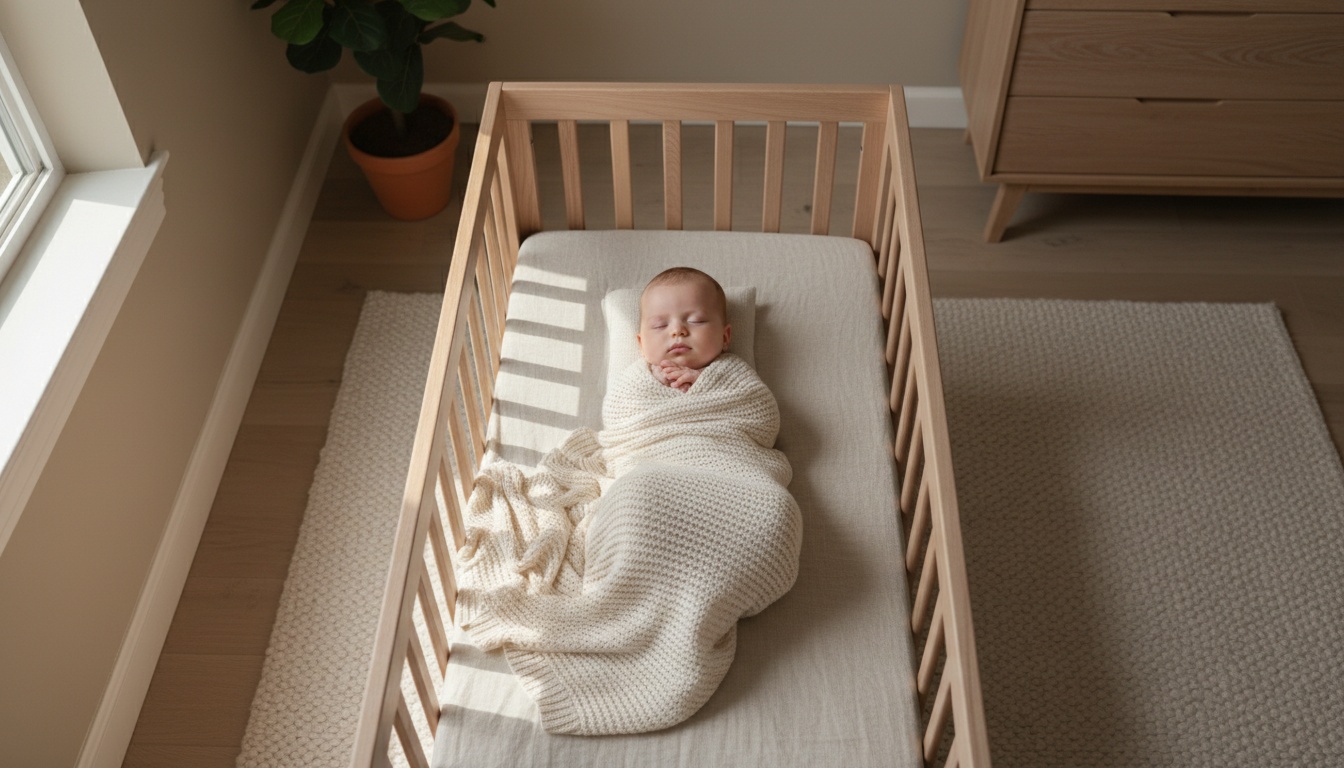
Following the AAP safe sleep guidelines strictly helps promote a safer sleep environment for your baby. Keep the crib completely bare.
Transition to an arms-free sleep sack as soon as rolling attempts begin. The AAP continues to recommend room-sharing without bed-sharing for at least the first six months.
Keep white noise machines at a safe distance and at a low volume; consult current AAP guidance for specific recommendations on distance and decibel limits.
11. Key Takeaways
- Total 4 month old sleep needs hit 14 to 17 hours daily.
- Following awake windows matters more than watching the clock.
- Building a predictable evening routine helps signal to their brain that it is time to rest.
- The regression ends. Most families find a workable rhythm within six weeks — often without formal sleep training.
If you want to track night wake-ups without hovering over the crib, BabyRadar turns a spare iPhone into a baby monitor with cry alerts, live video, and event snapshots. Download BabyRadar on the App Store. QUICK_ANSWER: