

1. How Much Sleep Does a 3-Month-Old Need?
A 3-month-old needs 14 to 17 hours of total sleep per day, according to pediatric sleep guidelines. Roughly 10 of those hours happen at night. The remaining 4 to 7 hours are split across 3 to 5 daytime naps.
Melatonin production begins ramping up around 9 to 12 weeks of age. This explains why you will notice your baby starting to show a more predictable pattern of drowsiness in the evening.
This is the circadian rhythm taking shape. It becomes your best window to anchor a consistent bedtime routine for the family.
2. Wake Windows for a 3-Month-Old: Sleep Cues and Nap Timing
At 3 months, most babies can handle 60 to 90 minutes of awake time before they need to rest again. Stretch it past 90 minutes and you will usually see the classic overtired spiral.
Turns out, this leads to inconsolable crying. Always watch your baby instead of constantly staring at the wall clock.
Early sleep cues include eye rubbing, ear pulling, staring blankly, and a sudden drop in activity. Catch these signs early. You're in the ideal nap window.
Nap lengths vary because infant sleep cycles last roughly 30 to 45 minutes. Full sleep-cycle linking (where babies connect two cycles without waking) typically improves between 4 and 6 months.
3. Sample 3-Month Sleep Schedules
These daily schedule templates represent realistic family patterns rather than strict medical prescriptions. Shift the timing based on your child's morning wake-up.
You can grab our printable schedule template below.
Schedule 1: Early Riser (6:00 AM Wake)
- 6:00 AM: Wake and feed
- 7:15 AM: Nap 1
- 8:30 AM: Wake and feed
- 10:00 AM: Nap 2
- 11:30 AM: Wake and feed
- 1:00 PM: Nap 3
- 2:30 PM: Wake and feed
- 4:15 PM: Nap 4 (Catnap)
- 5:00 PM: Wake and feed
- 6:30 PM: Bedtime routine
- 7:00 PM: Sleep
Schedule 2: Later Starter (7:30 AM Wake)
- 7:30 AM: Wake and feed
- 8:45 AM: Nap 1
- 10:00 AM: Wake and feed
- 11:30 AM: Nap 2
- 1:00 PM: Wake and feed
- 2:30 PM: Nap 3
- 4:00 PM: Wake and feed
- 5:45 PM: Nap 4
- 6:30 PM: Wake and feed
- 8:00 PM: Bedtime routine
- 8:30 PM: Sleep
Schedule 3: Breastfed Baby Schedule
Breast milk digests quickly, usually within 1.5 to 2 hours. This is exactly why breastfed babies typically need much more frequent overnight feeds to stay full. Adding a dream feed around 10:30 PM can push the first sleep block from 3 hours to 5.
- 7:00 AM: Wake and feed
- 8:15 AM: Nap 1
- 9:30 AM: Wake and feed
- 11:00 AM: Nap 2
- 12:30 PM: Wake and feed
- 2:00 PM: Nap 3
- 3:30 PM: Wake and feed
- 5:00 PM: Nap 4 (Catnap)
- 5:45 PM: Wake and feed
- 7:00 PM: Bedtime routine
- 7:30 PM: Sleep
- 10:30 PM: Dream feed
Schedule 4: Formula-Fed Baby Schedule
On the flip side, formula digests slower than breast milk. You will usually see longer stretches between daytime meals on a standard formula schedule.
- 7:00 AM: Wake and feed
- 8:30 AM: Nap 1
- 10:00 AM: Wake and feed
- 11:30 AM: Nap 2
- 1:30 PM: Wake and feed
- 3:00 PM: Nap 3
- 4:30 PM: Wake and feed
- 6:00 PM: Nap 4 (Catnap)
- 6:45 PM: Wake and feed
- 7:30 PM: Bedtime routine
- 8:00 PM: Sleep
Schedule 5: Working Parent / Daycare Schedule
Returning to work disrupts the routine. Communicate your preferred [our 2-month-old sleep schedule guide] progression clearly to your daycare providers.
If daycare nap timing mismatches your home rhythm, protect the evening bedtime as best you can. It is the one anchor that holds everything else together.
- 6:30 AM: Wake, feed, and get ready
- 7:30 AM: Daycare drop-off
- 8:00 AM - 4:30 PM: Daycare naps (often shorter, unpredictable)
- 5:00 PM: Pick up and feed
- 6:15 PM: Bedtime routine
- 6:45 PM: Sleep
4. Building a Bedtime Routine That Sticks
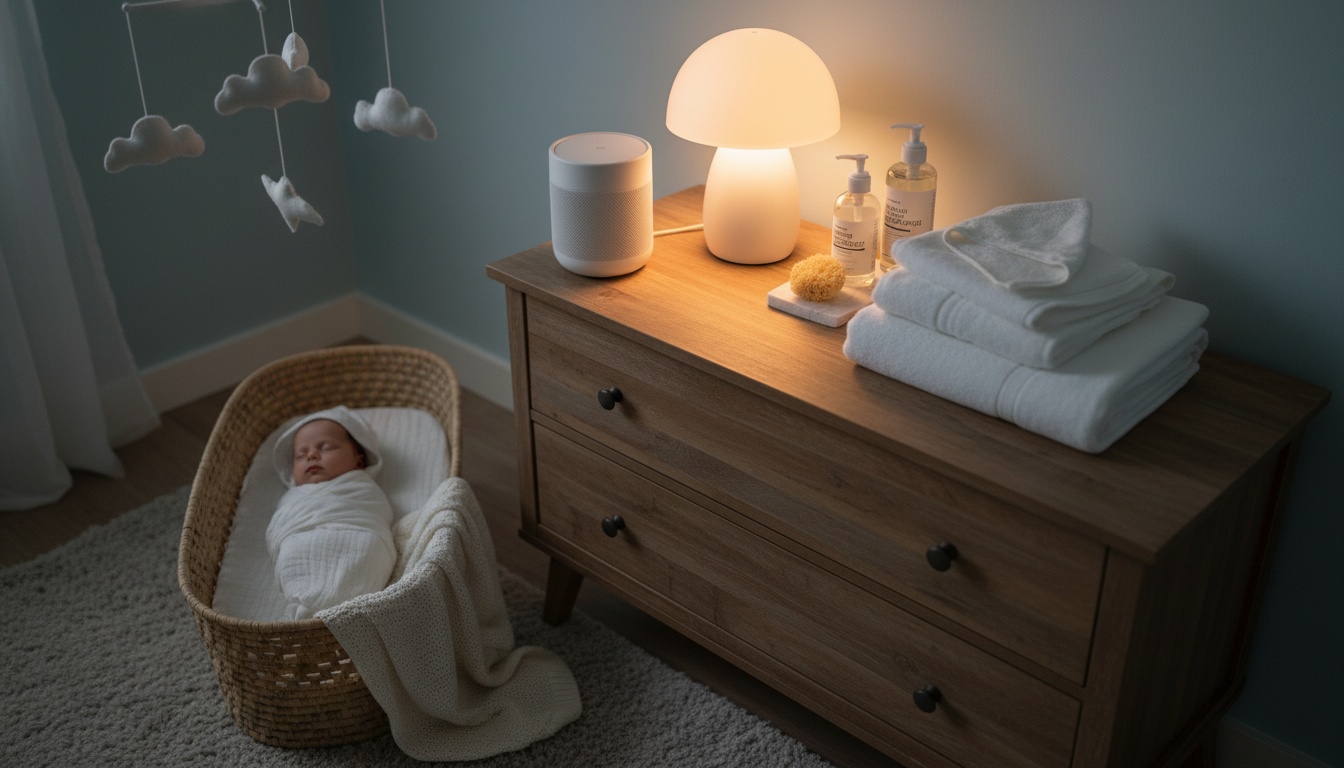
When my son was 3 months old, our second child, we already knew the routine mattered. We kept it simple. The sequence included a bath, massage, white noise, and feeding in dim light.
Within ten days, his first sleep stretch expanded from three hours to nearly five. Consistent cues help regulate the developing circadian rhythm and build a strong positive sleep association for your baby every single night.
Keep the white noise machine under 65 decibels. Anything louder risks damaging their developing hearing.
5. Common Sleep Challenges at 3 Months (and What to Do)
The 30-Minute Nap Intruder
This happens because babies complete one sleep cycle and briefly surface to a lighter sleep stage. At 3 months, this is completely normal. Most babies won't consistently link sleep cycles until 4 to 6 months.
The wake-to-sleep technique (gently rousing them 5 minutes before the expected wake) can help bridge the gap.
Growth Spurts and Cluster Feeding
Growth spurts commonly hit around 6 weeks, 3 months, and 6 months. The 12-week mark often overlaps with the 3-month surge.
Expect two or three days of intense cluster feeding sessions during this phase. Feed on demand to protect your milk supply, but maintain your baseline schedule framework as best as you possibly can.
The 4-Month Sleep Regression Warning
The [signs of the 4-month sleep regression] often begin showing early at 3 months. This shift is driven by real developmental changes in sleep architecture — and while it can feel disruptive, it is typically a temporary phase that most families work through with consistent routines and support.
Many parents wonder [when to start sleep training your baby] during this 3-to-4-month transition. Most pediatricians advise waiting until 4 to 6 months for formal training methods to begin in earnest at home.
That said, an occasional contact nap is fine.
Twins and Multiples
Syncing schedules preserves your sanity when managing multiples at home alone during the day. Always wake both babies together.
If one twin wakes for a feed, wake the other. It feels counterintuitive, but letting one sleep while the other feeds guarantees you'll be up again in 45 minutes.
Syncing them from the start is harder for one week and easier for the next six months.
6. Sleep Tracking Tools Worth Using at 3 Months
BabyRadar turns a spare iPhone into a smart audio wellness monitor — no new hardware required. The free tier covers cry-detection alerts and event lookbacks.
Pro adds live video and audio playback, as well as event photo snapshots (which auto-delete after 90 days). Check the App Store for current pricing and plan details.
Got an old iPhone 12 sitting in a drawer? That's your nursery monitor. To see how BabyRadar, your personal audio analytics tool, works without buying new hardware, [explore it on the App Store].
7. Safe Sleep Practices
Following [AAP safe sleep guidelines for infants] protects your infant during every single nap and overnight stretch. Always place the baby alone, on their back, in a firm and flat crib or bassinet — "alone" refers to the sleep surface being free of other people or objects, not to being in a room by themselves.
Parents must remove all loose bedding from the sleep environment, and inclined sleepers should not be used for infant sleep at all, as the AAP advises against them due to safety risks. The AAP recommends room-sharing for at least the first six months, and ideally for the first year. This supports a safer sleep environment.
On swaddling: Stop as soon as your baby shows any sign of attempting to roll, even if they haven't succeeded yet. Transition to a wearable blanket immediately to prevent dangerous accidents in the crib overnight while they sleep.
Three months is often when many babies begin to respond to a routine. Establishing consistent patterns can help support healthy sleep habits for years to come.
8. Key Takeaways
- A 3-month-old needs 14 to 17 hours of sleep.
- Most 3-month-olds do best with 60 to 90 minutes of awake time between naps.
- Watch your baby for sleep cues instead of obsessing over the clock.
- Establish a consistent bedtime routine that lasts under 30 minutes.
- Follow all safe sleep guidelines to protect your infant.
See how BabyRadar, your audio wellness monitor, works without any new hardware needed. [Explore on the App Store].