
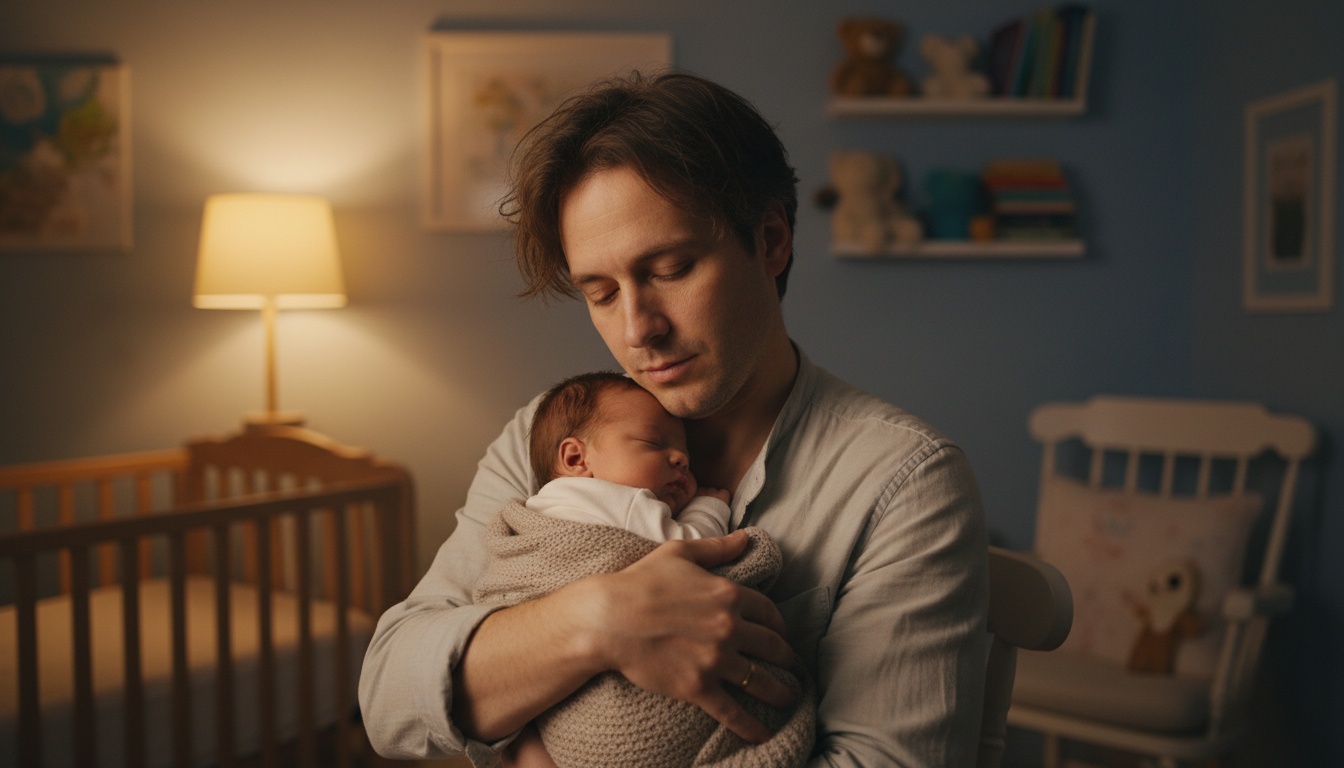
1. What "Sleeping Through the Night" Actually Means
Clinical definitions often clash with parental fantasies. Medical professionals define sleeping through the night as a continuous stretch of five to six hours, according to HSE guidelines.
That means a midnight waking remains completely normal.
Most exhausted parents desperately hope for a full night of unbroken rest. Still, total sleep across a 24-hour period matters far more than forcing long stretches prematurely. A safe sleep environment remains your primary goal.
2. When Do Most Babies Sleep Through? A Stage-by-Stage Guide
0–2 Months: Waking Is the Job
During those first two months, waking every few hours is completely biologically normal. They usually sleep fourteen to seventeen hours daily across short windows of two to four hours.
A swaddle helps them feel secure early.
3–4 Months: The Regression Hits
The dreaded four-month sleep regression often disrupts whatever minor progress you previously achieved. Some infants finally begin managing four- or five-hour stretches during this specific developmental phase, offering a brief glimpse of hope. However, many regress hard as their newborn sleep architecture matures into complex adult-like patterns.
5–12 Months: Longer Stretches Emerge
By six months, most infants are typically large enough that they may be able to take in enough daytime calories to reduce night waking, though this varies by baby and feeding method.
Many older babies can sleep six to eight hours without waking. Solid foods help overnight. The catch is, the eight-to-ten-month regression can still temporarily throw your nap schedule off.
Tracking typical sleep patterns across the first year reveals clear developmental trends. This sample chart highlights those milestones:
| Age Band | Typical Night Stretch | Total Sleep | Naps |
|---|---|---|---|
| 0–2 months | 2–4 hours | 14–17 hours | 4–5+ |
| 3–4 months | 4–5 hours | 12–15 hours | 3–4 |
| 5–6 months | 5–6 hours | 12–14 hours | 2–3 |
| 7–12 months | 6–8+ hours | 11–14 hours | 2 |
A typical six-month-old on two naps might look like this. They wake at 7 a.m., nap from 9 to 10 a.m., nap again from 1 to 3 p.m., and go to bed at 7 p.m. One feed around 2 a.m. creates a seven-hour first stretch.
By strict clinical definition, that specific pattern counts as sleeping through the night.
What About Premature Babies?
Always use corrected age for premature babies. If your baby arrived two months early, a six-month-old is developmentally only four months. Adjust your milestone expectations accordingly.
Feeding method also affects how long those stretches last.
Why Breastfed and Formula-Fed Babies Differ
Formula digests slower than breast milk. Some research suggests formula-fed babies may manage slightly longer stretches on average in the early months, though findings vary across studies. That extra time is meaningful at 3 a.m.
However, it is definitely not a valid medical reason to switch your chosen feeding methods. Because breastmilk digests faster, more frequent waking is normal for breastfed babies. It is not a problematic habit requiring immediate fixing.
3. Readiness Signs: Is Your Baby Ready to Drop Night Feeds?
Consider discussing these signs with your healthcare provider before making significant changes to feeding schedules:
- Consistent weight gain (as monitored by your healthcare provider)
- Waking from habit rather than frantic hunger
- Settling quickly without demanding a full feed
- Adequate daytime intake that remains consistent
- Established ability to self-settle independently
4. When NOT to Push for Longer Stretches
Pushing for longer stretches during illness, teething, a growth spurt, or the first weeks of daycare usually backfires. Their caloric needs spike and their stress hormones are elevated. Any new sleep associations you introduce under pressure tend to stick in ways you will regret.
Wait for a stable two-week baseline.
5. Sleep Regressions: Why Progress Sometimes Reverses
Sleep regressions are temporary setbacks tied directly to developmental leaps, rather than permanent parenting failures. Separation anxiety peaks around eight to ten months (American Academy of Sleep Medicine).
Regression means their brain is growing. Full stop.
Maintain your regular routine and avoid introducing new sleep associations under pressure. Riding it out takes weeks.
6. How to Help: Routines, Feeds, and Safe Sleep
Build a Short Bedtime Routine
A solid bedtime routine helps immensely. Keep your sequence of bath, feed, and wind-down to a short twenty or thirty minutes. A consistent bedtime regulates their circadian rhythm while signaling that a dark room means it is finally time to rest for the night.
Daytime feeding strategy requires front-loading those calories so they wake less frequently during the night. Some parents try the dream feed. Read our guide on how dream feeds work to see if feeding them between 10 p.m. and 11 p.m. without fully waking them fits your family.
Safe Sleep Comes First
Evidence remains mixed on whether dream feeds actually help babies sleep through long-term. Prioritizing a safe sleep environment is crucial. Review the safe sleep environment guidelines to ensure you always place infants on their back with no bottles or loose products in the cot.
Medical guidelines suggest sharing a room for at least the first six months of life (per AAP guidelines). Keeping them close allows you to monitor them easily without resorting to unsafe practices, like bringing them into your own bed for overnight feeds. For parents who want to monitor sound events without entering the room, BabyRadar turns a spare iPhone into a sound event monitor.
7. A Monitoring Tool We've Been Testing: BabyRadar
We receive a referral fee if you sign up via our link. This doesn't affect our assessment.
We tested BabyRadar across several households, and the encrypted relay performed reliably throughout our testing period. BabyRadar offers cry notifications, turning iPhones into wellness monitors — check their site for current features and any free tier availability, as these may change. The Pro tier adds live video, event snapshots, and audio playback — check the current pricing on their site, as rates are subject to change.
This allows for remote sound event monitoring without disturbing their sleep. Skip the expensive hardware. BabyRadar uses your existing iPhones over cellular or Wi-Fi to provide wellness insights. Cloud-stored event photos are auto-deleted after a set period (verify current policy on their site, as this may have been updated).
Explore BabyRadar's features and pricing.
8. Considering Sleep Training? What to Expect from Professional Services
Many desperate parents eventually consider hiring professionals. Sleep training services analyze potential causes for disruptions before creating new habits to support rest. Working with an experienced consultant can sometimes teach a baby to sleep through the night in a matter of days.
The results can be faster than most parents expect.
A reader who reached out after our sleep training piece shared her experience. This mum of a nine-month-old who had not slept more than two hours at a stretch said working with a consultant got them to six-hour nights within a week. Results like that aren't guaranteed, but they are certainly not rare either.
That said, external factors will frequently disrupt your established routines. Daylight saving time occurs twice a year and can completely throw off sleep schedules. You can mitigate this by gradually shifting their bedtime fifteen minutes earlier or later over the course of a week before the change.
False starts compound the problem. These happen when infants wake up crying just thirty to sixty minutes after falling asleep. Daytime overtiredness can cause babies to release stimulating hormones like cortisol, making it much harder for them to settle down and stay asleep overnight.
Adjusting their final wake window usually solves this problem.
9. When to Seek Professional Help for Sleep Concerns (and Your Top Questions Answered)
Persistent waking beyond twelve months warrants attention. Contact a public health nurse if you notice significant weight loss or poor gain. Extreme parental exhaustion affecting safety is another exceptionally clear signal that you should immediately seek professional medical guidance from your trusted local pediatric healthcare provider.
Remember that slower progress is usually completely developmentally normal.
Why Is Sleep Safety Most Critical Between 2 and 4 Months?
Peak risk in this window is tied to maturing arousal responses. Babies are transitioning out of newborn sleep patterns but haven't yet developed the ability to rouse themselves as effectively. Room-sharing without bed-sharing is strongly recommended for at least the first six months. Forcing deeper sleep can work against a baby's natural biology.
What Is the Hardest Month for a Baby (and Parents)?
The four-month mark is notoriously brutal. Sleep regression, increased awareness, and feeding changes all converge simultaneously to wreck your nights. Normalizing this difficulty helps.
Practically every parent we speak to describes this exact phase as their absolute lowest point of exhaustion.
How Long Should a 2-Month-Old Sleep at Night Without Eating?
Three to four hours is typical. Stretching to five hours sits on the longer end of normal for this age. Going longer than five hours without feeding is not recommended at this early stage unless you have received explicit medical guidance beforehand.
Frequently Asked Questions
Can my 2-month-old sleep 7pm to 7am?
No, a continuous 12-hour stretch is highly unrealistic and developmentally inappropriate for a two-month-old. Newborns need frequent calories to support rapid growth and usually wake every few hours. Expecting a full night of sleep at this age ignores their biological need for night feeds.
Why did my baby stop sleeping at 9 months?
Separation anxiety peaks around eight to ten months of age. Increased mobility like crawling or pulling up also disrupts previously established sleep associations. This regression is temporary and usually resolves within two to six weeks if you maintain a consistent bedtime routine.
Do formula-fed babies sleep longer?
Formula digests slightly slower than breast milk, which occasionally helps formula-fed babies manage slightly longer stretches on average. However, breastfed babies waking more frequently is completely normal. Neither feeding method guarantees your baby will sleep through the night early.
When can I introduce a comfort toy in the cot?
Figuring out [when to introduce a comfort toy](link) depends on safe sleep guidelines. This typically means waiting until your baby is at least 12 months old. Before that age, the cot should remain completely empty to minimize any safety risks.
What is a false start in baby sleep?
False starts occur when a baby wakes up crying 30 to 60 minutes after bedtime. This is usually caused by daytime overtiredness, which triggers the release of stimulating hormones like cortisol. Adjusting their final wake window often resolves the issue.
How much should a newborn sleep in 24 hours?
Newborns typically sleep about 14 to 17 hours total in a 24-hour period. This sleep is usually broken up into short windows of two to four hours between frequent feeding sessions.