
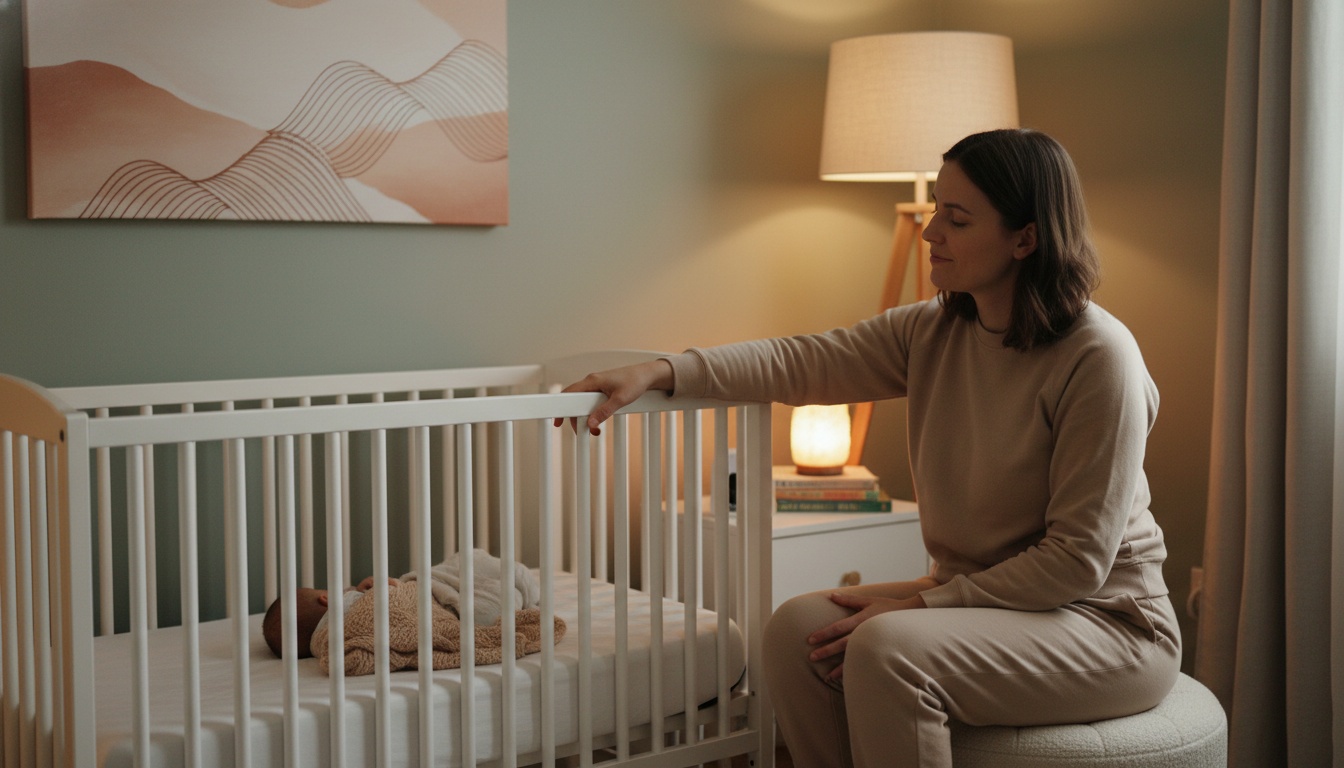
1. What Is the Ferber Method? Why It's Not Cry-It-Out (And Why That Matters)
The Ferber method is graduated extinction sleep training. Unlike full extinction (true cry it out method), parents check on their baby at progressively longer intervals.
This behavioral sleep training approach developed by Dr. Richard Ferber in 1985 focuses on one core principle: babies can learn independent sleep while parents provide emotional support through brief visits.
"Ferberizing" became shorthand for his method. Many parents misunderstand the actual process, though.
The method teaches self-soothing through controlled crying with parental reassurance — not abandonment. Here's why that matters.
How Sleep Associations Form
Babies develop sleep associations with whatever helps them fall asleep. Rocking, feeding, or parental presence become required for sleep initiation.
These patterns aren't inherently problematic. But they become unsustainable when babies can't return to sleep without recreating the exact same conditions.
Why Progressive Intervals Work
Graduated extinction breaks these associations systematically. The timed check-ins prevent complete distress while allowing babies to discover their own soothing mechanisms.
Progressive waiting intervals give your baby a chance to self-soothe while proving you're still there — reducing anxiety for both of you. Research published in Pediatrics (2006) found that graduated extinction reduces total crying time compared to unmodified extinction, while maintaining secure attachment patterns (Mindell et al., 2006).
Babies learn that crying doesn't immediately bring parents, but parents haven't disappeared entirely.
2. The Progressive Check-In Schedule: When to Visit Your Baby (And When to Wait)
The 5-3-3 rule (which isn't even Ferber's actual schedule, by the way) refers to progressive waiting intervals. The original schedule typically starts with different timing patterns.
Many families use modified versions of Ferber's approach. Here's a common progressive waiting schedule:
- Night 1: Check after 3 minutes, then 5, then 7 (repeat 7-minute intervals)
- Night 2: 5-10-15 minute intervals
- Night 3: 10-15-20 minute intervals
Each subsequent night may extend the waiting periods. Some families progress to 20-25-30 minute intervals between parental check-ins.
What to Do During Check-Ins
Keep visits brief — 90 seconds maximum. I time this with my phone because it feels much longer when your baby's crying.
Offer verbal reassurance: "Mommy's here, it's time to sleep." Avoid picking up your baby during check-ins.
In my experience, parents who pick up during check-ins restart the entire process. I've seen families add 2-3 extra nights to their timeline this way.
Pat their back or briefly touch their hand, but don't restart the soothing process. Some parents find these visits increase crying initially — that's normal.
3. How Does Ferber Compare to Cry It Out? Key Differences
Full extinction means no parental contact until morning. Ferber includes scheduled reassurance visits throughout the night.
| Method | Parental Contact | Timeline | Emotional Impact |
|---|---|---|---|
| Ferber | Timed check-ins | 3-7 nights | Moderate distress |
| Cry It Out | None until morning | 1-3 nights | Higher initial distress |
Extinction method often works faster because there's no mixed messaging. But many parents can't handle the emotional toll of no contact.
Ferber takes longer — well, usually longer — but feels more manageable for families. The controlled crying approach maintains parent-child connection during the learning process.

4. How to Start Ferber Sleep Training: Night-by-Night Execution (Without Losing Your Mind)
Pre-Training Preparation
Start with optimal timing. Avoid behavioral sleep training during illness, travel, or major life changes.
Your baby should be healthy and settled into routine. Create the right sleep environment first — dark room, comfortable temperature, consistent bedtime routine.
Night 1 nearly broke me. I sat outside my daughter's door crying harder than she was. I questioned everything — was I damaging her? Was I being cruel? The doubt was overwhelming.
Age-Appropriate Implementation
Most experts suggest waiting until babies show readiness signs. Look for consistent bedtime drowsiness, ability to self-soothe briefly, and established feeding schedule.
The American Academy of Pediatrics acknowledges graduated extinction as a sleep-training approach for healthy babies 4-6 months and older, and recommends pediatric consultation before starting any sleep-training method (AAP, 2016).
Premature babies may need adjusted timelines. Very sensitive babies might benefit from waiting longer before starting any sleep training approach.
Trust your instincts about your child's developmental readiness. Pediatrician consultation helps determine appropriate timing for your specific situation.
Night-by-Night Breakdown
Night 1 feels the hardest emotionally. Expect significant crying with your first check-in visits — many parents report feeling worse than their babies.
Nights 2-3 often show some improvement. Some babies have extinction bursts — temporary increases in crying intensity.
Research on graduated extinction suggests many families report improved sleep patterns by night 4-5, though individual results vary — meaning you may see better sleep for everyone within that timeframe.
Sleep regression can happen during this period. Don't abandon the method — consistency matters more than perfection. Trust me on this one.
Ready to track your progress? Many parents find that monitoring intervals (rather than guessing) reduces anxiety and improves consistency. [See how parents track sleep training progress]
5. Is Ferber Right for You? How to Know Before You Start (And What to Do If It's Not)
Ferber works best for families who can handle moderate crying but need some reassurance contact. If you can't tolerate any crying, choose gentler sleep training alternatives.
Consider your living situation. Apartment dwellers might prefer faster extinction methods to minimize neighbor disruption.
Single parents often find check-ins too emotionally draining. Certain health conditions may require pediatric guidance before starting any sleep-training approach.
Emotional Preparation for Parents
Sleep deprivation makes everything harder. Start when you're rested enough to handle several difficult nights.
Partner support proves essential. Agree on the plan beforehand and take turns handling check-ins — one parent often handles the process better than the other.
Some parents wear headphones during crying periods. Others find comfort in timing the intervals precisely.
Find your coping strategy before starting. Here's what nobody tells you: you'll question everything on night 2.
6. Why Ferber Stops Working (And How to Get Back on Track in 24 Hours)
If crying increases after night 3, evaluate your consistency. Mixed messages confuse babies and extend the learning process.
Room sharing can interfere with sleep association changes. Consider temporary separation during training if your presence stimulates more crying.
Illness, teething, or developmental leaps disrupt sleep training. Pause the method and restart when your baby feels better.
Some babies genuinely don't respond well to Ferber — and that's not a parenting failure, it's temperament.
If tracking intervals manually adds stress, [explore tools that help parents stay consistent during sleep training].
Safety Considerations and Expert Guidance
Consulting your pediatrician before starting helps ensure sleep training is appropriate for your baby's health. Babies with certain health conditions, such as severe reflux or feeding challenges, may benefit from pediatric guidance on timing.
If crying seems excessive, consider whether hunger might be a factor. Growth spurts can increase caloric needs, so discuss feeding schedules with your pediatrician if you have concerns.
Trust your parental instincts. If your baby shows signs of illness, injury, or distress beyond typical sleep-training adjustment, consult your healthcare provider immediately.
Downloadable Ferber Method Chart
Track your progress with a structured schedule. Print a chart showing:
- Progressive waiting intervals for each night
- Check-in timing logs
- Sleep pattern observations
- Crying duration tracking
Documentation helps maintain consistency and shows progress over time.
7. Surviving Sleep Deprivation: 3 Parent Strategies That Keep You Consistent
Sleep deprivation during training makes you second-guess everything — which is why partner support and clear tracking systems prevent you from abandoning the method on night 2 when doubt hits hardest.
Take shifts with your partner. One handles bedtime, the other manages middle-of-night wake-ups.
Nap when possible during the day. Your baby's learning process requires your emotional stability and consistent responses.
8. Ferber Method Alternatives and What's Next
Gentle sleep training options include chair method, pick-up-put-down, or gradual retreat techniques. These approaches take longer but involve less crying.
Once independent sleep is established, maintain consistency. Occasional setbacks during illness or travel are normal and temporary.
Building strong sleep foundations requires ongoing attention to sleep hygiene, appropriate bedtimes, and consistent routines. The Ferber method creates the initial framework.
The Ferber method works because it balances two competing needs: your baby's need to learn independence and your need to stay emotionally connected. Success depends less on perfect execution than on consistent boundaries and realistic expectations.
Hybrid Approaches
Some families combine Ferber with other methods. Start with gentler approaches, then progress to timed check-ins if needed.
Modified schedules work for many families. Adjust intervals based on your baby's temperament and your comfort level.
Consistency matters more than following exact protocols. Find what works for your family and stick with it.
Transition Strategies
When stopping the method, maintain established bedtime routines. Don't immediately return to previous sleep associations that required your presence.
If you need to pause training, resume where you left off rather than starting over. Brief interruptions don't erase progress.
Monitor for sleep regression patterns. These temporary setbacks are developmental, not training failures.
9. Key Takeaways
- Ferber method uses graduated extinction with timed check-ins, not full cry-it-out
- Progressive waiting schedules can be modified for individual families
- Research suggests many families report improved sleep patterns by night 4-5 with consistent implementation
- Age-appropriate timing and pediatric consultation are important considerations
- Check-ins provide parental reassurance without restarting the soothing process
- Success requires emotional preparation and partner support for parents
- Troubleshoot consistency issues before abandoning the method entirely
- Hybrid approaches combining methods work for many families
```
A quieter night, starting with the iPhone in your drawer.
BabyRadar turns a spare iPhone into a smart baby monitor. Cry detection runs on-device; when your baby cries you get an alert with a crib photo, and you can watch live from any room. The camera is opt-in and stays off between uses.
Download on the App Store